Free · France
Why French Forms Ask for So Many Documents

The useful question is not “How much paper should I bring?” but “What does each item establish?”
A form seems straightforward until its supporting-document list opens. You need an identity document, an address document, perhaps a civil-status record—and something else because the first document is not in your name. It can feel as though the task is to accumulate paper until the pile looks convincing.
That is the wrong strategy. A strong file is not necessarily a thick file. It is a set of relevant evidence matched to the actual procedure, in the form that procedure accepts. Understanding that structure is more useful than treating paperwork as an inexplicable French national habit.
This article offers a way to read a document request. It does not provide a universal checklist, decide your legal eligibility or promise that a particular file will be accepted. The official instructions for the exact procedure and your circumstances remain decisive.
Read the list as a set of questions
An original way to organise a request is to ask what each item is meant to establish:
| Evidence question | What to look for in the instructions | |---|---| | Who is the person? | The accepted identity evidence and whether an original, copy or digital verification is specified. | | What is their relevant situation? | The particular status, relationship or circumstance that the procedure asks them to demonstrate. | | Which address is relevant? | Whose name appears, the applicable date requirement and any different route for someone hosted by another person. | | Is the record current enough for this use? | A procedure-specific recency condition, rather than an assumed expiry date for all documents. | | Can the receiving authority use the document? | Language, required form, and any applicable authentication or exemption. |
These headings are an editorial reading aid, not five compulsory categories for every application. Some procedures need fewer items; others use evidence not listed here. The point is to make the purpose of a request visible before you obtain or upload something.
Salle du Dais, Hôtel de Soubise, Paris, 21 May 2016. Photo: Jean-Pierre Dalbéra, CC BY 2.0. Unmodified original. Historical museum-room context, not a present-day application desk or an explanation of today's documentary requirements.
One address can require different kinds of evidence
The official French identity-card and passport guidance illustrates why a single checklist does not fit everyone. For an applicant with an accepted address document in their own name, the page specifies one document and a recency condition. A person living with a relative or friend follows a different branch involving the host's identification, an accommodation declaration and address evidence. These are conditions for that named procedure—not a universal rule for every French administrative file.
The Service Public address-evidence page also demonstrates why its latest notices matter: when checked on 29 October 2026, a temporary notice excluded tax notices for this identity-document purpose even though the longer list below still mentioned them. Read the notice together with the relevant branch and clarify apparent inconsistencies through the official service before relying on an item.
The practical lesson is not “always collect three documents.” It is “select the branch that describes your real circumstances.” A bill in someone else's name may not answer the same evidence question as a bill in your own name. Nor should you invent a document or alter its details to make the simpler branch fit.
A document can remain valid but need a recent copy for a particular task
Civil-status records make this distinction especially clear. Service Public explains that civil-status copies and extracts generally remain valid while their recorded information has not changed. Some procedures nevertheless require a recent issue: its guidance identifies specific recency rules for identity documents, marriage and PACS, with distinctions for foreign-issued records.
That is not the same as saying that every birth certificate “expires” after three months. The official validity guide should be read with the instructions for the actual application.
For your own notes, separate the event recorded, the date the copy was issued, and the date the receiving procedure uses to assess recency. A birth many years ago and a copy issued recently are not contradictory. They answer different questions.
Before paying for services or ordering another copy, establish whether a new one is actually required. Conversely, do not assume that an old copy is sufficient merely because the underlying event has not changed. The relevant requirement belongs to the receiving procedure.
Translation and authentication solve different problems
A translation addresses language. Authentication concerns the formal origin of a document. Treating them as interchangeable can leave a file incomplete even after considerable effort.
For translation, Service Public explains how to find an approved translator. In France, the relevant professionals are judicial experts on court lists. It also explains that certain EU public documents can be accompanied by a multilingual form, although a receiving authority may still request a translation where necessary. Do not generalise this into either “every foreign document needs a paid translation” or “an EU document never does.”
For authentication, the official foreign-public-document guidance explains legalisation in terms of the signature, the signatory's capacity and, where relevant, the seal or stamp. International arrangements can provide exemptions or allow an apostille instead. The applicable route depends on the document and country; the page directs readers to the relevant official information and consular advice.
Before commissioning anything, write down three separate questions: Is a translation needed? What kind is accepted? Is authentication required, replaced by an apostille, or exempt? A translated document is not automatically authenticated, and an authenticated document is not automatically in an accepted language.
This is general orientation only. It does not assess the formalities for a particular document or provide a translation service.
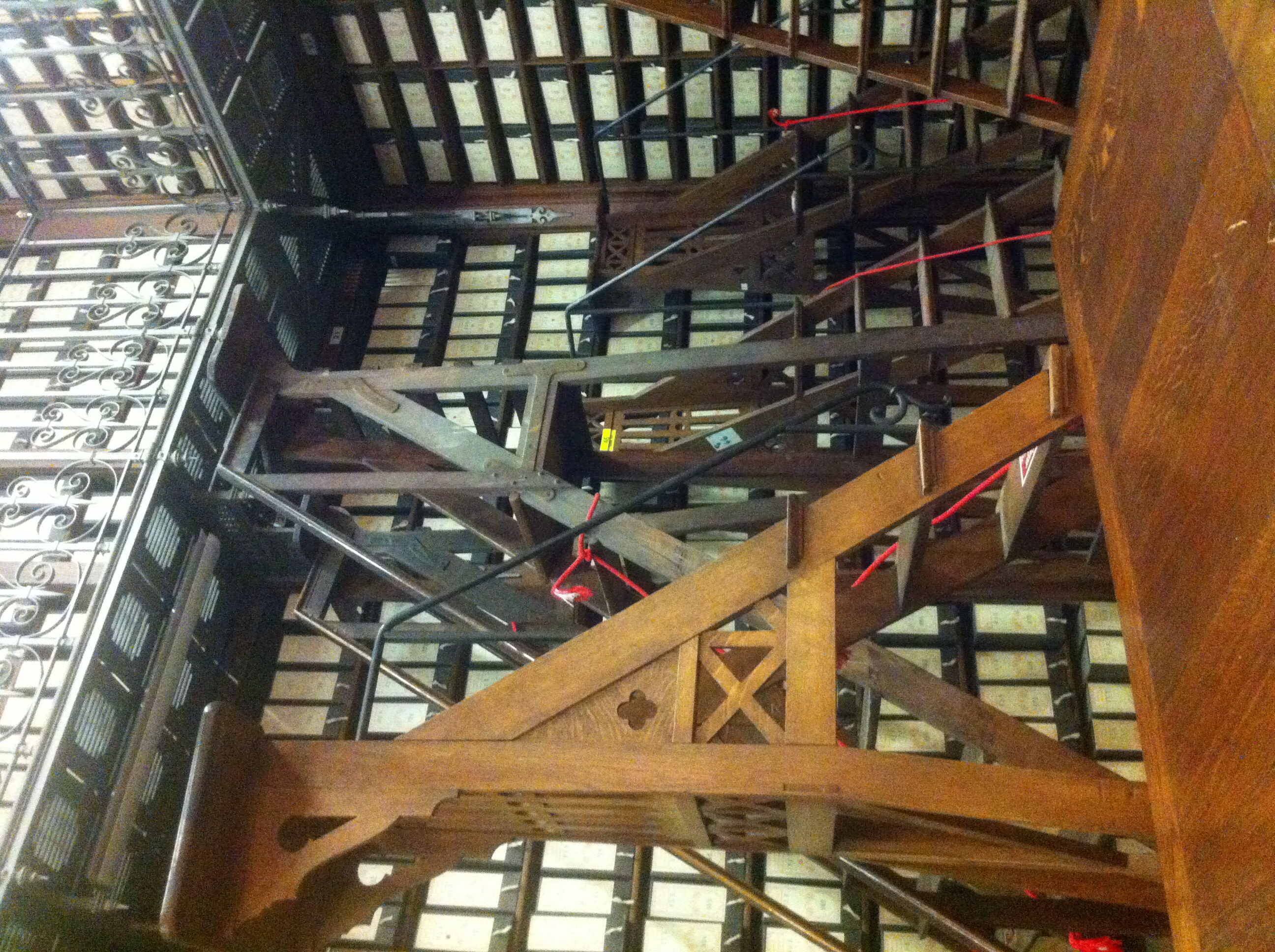
Archives nationales, Paris, 17 May 2014. Photo: Allison Meier, CC BY-SA 2.0. Original photograph, displayed in its embedded portrait orientation. Historical document-storage context only—not an example of current application evidence or a promise of public access. The indoor image retains its original photographic grain.
More personal information is not automatically better evidence
Anxious applicants sometimes send everything they have: old statements, unrelated family papers and multiple identity copies. That can make the file harder to follow while exposing more personal information than necessary.
The CNIL's data-minimisation principle says that personal data should be relevant and limited to what is necessary for the purpose. This does not authorise an applicant to ignore a lawful document requirement. It does provide a useful reason not to treat indiscriminate oversharing as good preparation.
Follow the requested list and the official channel. If an additional request seems unclear, ask what specific item is needed and for which part of the procedure. Do not silently redact, substitute or omit information that the receiving authority requires; resolve the question first. Equally, do not post an unredacted file in a public group to ask whether it “looks right.”
Build a match, not a pile
Use a short working list with one row for each actual requirement. This is an original organisation method, not a new official form.
Requirement: copy the document label accurately from the current instructions. Include the branch that applies to you.
Candidate evidence: identify the document you already have. Keep its issuer and issue date visible in your own records.
Unresolved condition: note any question about name, date, format, translation or authentication. Mark it unknown rather than assuming acceptance.
Next action: obtain a required item, ask the competent authority a precise question, or prepare the requested readable copy.
Submission record: once actually submitted, retain the reference or acknowledgement and the date. Preparing a file is not the same as submitting it; uploading material is not the same as receiving a favourable decision.
For digital copies, inspect what you are about to send: are all required pages present, is the text legible, and does the file correspond to the named item? Follow the portal's actual format and size limits. Keep the original record unchanged. Do not edit dates, names, stamps or other substantive information to conceal a discrepancy.
A fictional example: the wrong remedy for a missing item
Imagine a person whose file asks for address evidence under the branch for someone living with a host. They have the host's bill, but they have not checked the rest of that branch. To be helpful, they add several unrelated personal documents.
The extra material does not necessarily fill the missing requirement. The better next step is to reread the applicable instructions, identify the precise gap and resolve that gap through the proper route. This example does not establish the requirements for any particular reader; it illustrates why quantity and relevance are different.
Now imagine that the person discovers a spelling difference between two records. Quietly altering a scan would create a new problem. The useful question is how the competent authority wants the discrepancy explained or corrected. Keep the source documents intact and distinguish an explanatory note from an official amendment.
Ask for clarification without losing the thread
A focused enquiry can be brief:
For [named procedure and case reference], the instructions request [exact item]. My situation is [relevant fact]. I currently have [document]. Please confirm the applicable requirement or the official route for resolving this point.
Send only the information needed through a verified channel. This wording is not a formal appeal and does not replace a required form or deadline. It simply makes the question easier to answer than a message saying, “I have sent lots of papers; why is something still missing?”
French forms can be demanding, and unclear instructions deserve clarification rather than romantic explanations about bureaucracy. But the most useful response is usually practical: identify the evidence question, check the correct branch, preserve the originals and supply what the actual procedure requires. A well-organised file tells a clear story without asking the reader to infer it from a mountain of paper.
Sources and scope
Official Service Public guidance and the CNIL definition were checked remotely on 29 October 2026. Examples explain documentary reasoning, not an individual administrative or legal decision. Requirements can change and vary by procedure, document origin and personal circumstances. No application was submitted or personal document inspected. Historical archive photographs are contextual illustrations, not examples of evidence acceptable for a present-day application.