Free · France
How the French School Day Works
A school day has more than one beginning and ending. There is the moment the gate opens, the start of teaching, the lunch transition, the end of class and—if a child is registered—the end of an afternoon activity. Confusing these boundaries can leave a family with an unexpected gap even when the school timetable looks straightforward.
This guide focuses on public primary-school life, especially elementary school. It does not describe every private school, collège or lycée. Its practical rule is simple: build the day from named services, not from the time printed above the school gate.
One national framework, different local rhythms
The Education Ministry describes elementary teaching as 24 hours a week. Its national overview presents the nine-half-day arrangement with territorial qualifications. That is a starting point, not a promise that every town teaches on Wednesday. The city examples below show why the local timetable matters. Education Ministry, updated 12 August 2026.
In Paris, the elementary-school page lists teaching from 08:30 to 11:30 on weekday mornings, with afternoon classes from 13:30 to 16:30 on Monday and Thursday and from 13:30 to 15:00 on Tuesday and Friday. It says morning entry normally starts at 08:20. An open gate is therefore not the same event as the start of class. These are Paris's published arrangements, not a nationwide timetable. City of Paris, updated 1 September 2026.
In Lyon, the municipal overview instead lists teaching on Monday, Tuesday, Thursday and Friday: 08:30–12:00 and 14:15–16:45. Its Wednesday morning slot, 08:30–12:00, is labelled workshops rather than class. The city also lists a morning reception service and PEPS evening provision. Families should check their particular school's arrangements and registration requirements rather than treating every advertised slot as automatically included. City of Lyon, current page with 2026–27 calendar.
The contrast changes a real planning question. “What time does school finish on Wednesday?” can conceal two different situations: a teaching morning followed by a separate afternoon arrangement, or a day when attendance concerns an optional activity rather than ordinary class. Ask which kind of time you are looking at before arranging a journey or a work commitment.
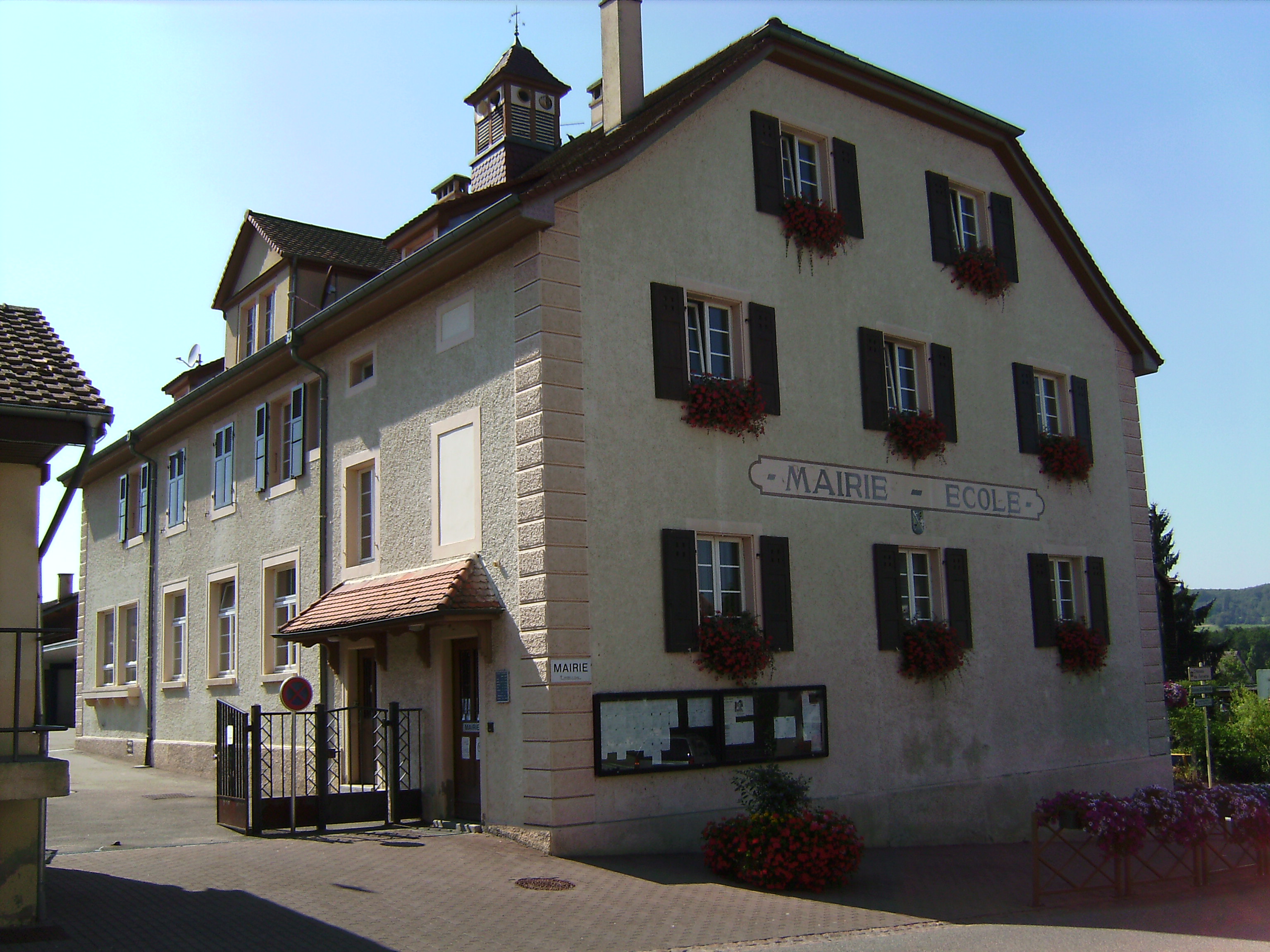
“Mairie–École” lettering on a building in Leymen, in a photograph uploaded in 2007. It illustrates municipal and school vocabulary, not the school's present timetable. Photograph: Vitaly Volkov (vitalyzator), original and licence, CC BY 2.0. Capture date unverified; image unchanged.
Lunch is a transition, not just a meal
The words pause méridienne refer to the midday interval. For planning, separate three questions: whether the child eats a school meal, whether the child stays on site, and who supervises the interval. Do not assume an answer to one settles the other two.
Paris's 2026–27 activities page describes the 11:30–13:30 interval as a period with animation staff and meals organised through the arrondissement's caisse des écoles. It also requires families to indicate whether a child remains at midday in the multi-activity form. The same page distinguishes Tuesday and Friday TAP activities, 15:00–16:30, from teaching. Although those TAP workshops are free, families must still complete the relevant stay-or-leave information. Free does not mean no registration step. City of Paris, updated 3 September 2026.
This is not an instruction to use the Paris form elsewhere. It demonstrates why “school registration is done” may leave lunch or activities unresolved. Look for the local process, then retain the acknowledgement that identifies the service and days actually booked.
Build a five-boundary card
Make one card for each distinct type of weekday. A Tuesday with an activity may need a different card from a Thursday without one. The following is an original planning tool, not an official registration form.
| Boundary | What to record | What would remain unresolved? | |---|---|---| | Arrival | Gate time, teaching start, reception booking if used | Arriving early without a confirmed reception arrangement | | Midday exit or stay | Meal booking, stay/leave choice, return time if leaving | Assuming the meal payment proves supervision is arranged | | End of teaching | Exact time for that weekday | Copying Monday's time onto Tuesday | | Activity handoff | Named activity, place, booking confirmation | Knowing the activity exists but not whether the child has a place | | Collection | Agreed time, exit, authorised person and contact route | A plan that relies on an unconfirmed early departure |
Write “not yet confirmed”, not a guessed time, in an unresolved box. Ask the responsible service about that box specifically. A short question with a weekday, class and service name is easier to answer than “Can my child stay at school?”
A fictional Wednesday check
Imagine two families comparing calendars. One has written “Wednesday: school until lunch.” The other has written exactly the same words, but their city describes Wednesday morning as workshops. Their calendars look identical; their administrative situations may not be.
The useful correction is not to decide that one city has a better week. It is to replace the vague label with teaching / booked activity / no confirmed provision, then add the handoff after the morning ends. An available workshop is not proof of a booked place. Nor does a morning arrangement establish an afternoon one.
Questions worth asking before the first ordinary week
- Which timetable applies to this particular school and class? Obtain the current version, not an image saved from a previous year.
- Does registration cover teaching only, or have lunch and activities been separately confirmed? Keep those answers distinct.
- Where does responsibility pass from one team to another? Record the local handoff, rather than assuming the same adult supervises every part of the day.
- What is the procedure for an absence, a changed collection person or a late arrival? Use the school's or service's own instructions; this article does not grant an exception.
- What changes on a Wednesday, during holidays or when a service is exceptionally unavailable? Do not copy the ordinary teaching-week plan into a different calendar period.
Two useful, original phrases are: Quels sont les horaires de classe pour ce jour-là ?—“What are the class hours on that day?”—and L'inscription à cette activité est-elle confirmée ?—“Is registration for this activity confirmed?” They ask for different evidence.
A workable school-day plan is not simply a long block marked “school.” It is a chain of confirmed transitions. Understanding that chain makes the local rhythm easier to navigate without mistaking one city's practices for all of France.
Sources and scope
Four official pages were read remotely on 29 October 2026. Links accompany the relevant statements. Paris and Lyon are contrasting municipal examples, not a representative survey or a guarantee for every establishment. No fee schedule, national collection permission, registration deadline or holiday arrangement is inferred. The original card and fictional example help organise questions; they do not replace school rules or bookings.