Free · France
How to identify official cultural heritage labels on village buildings
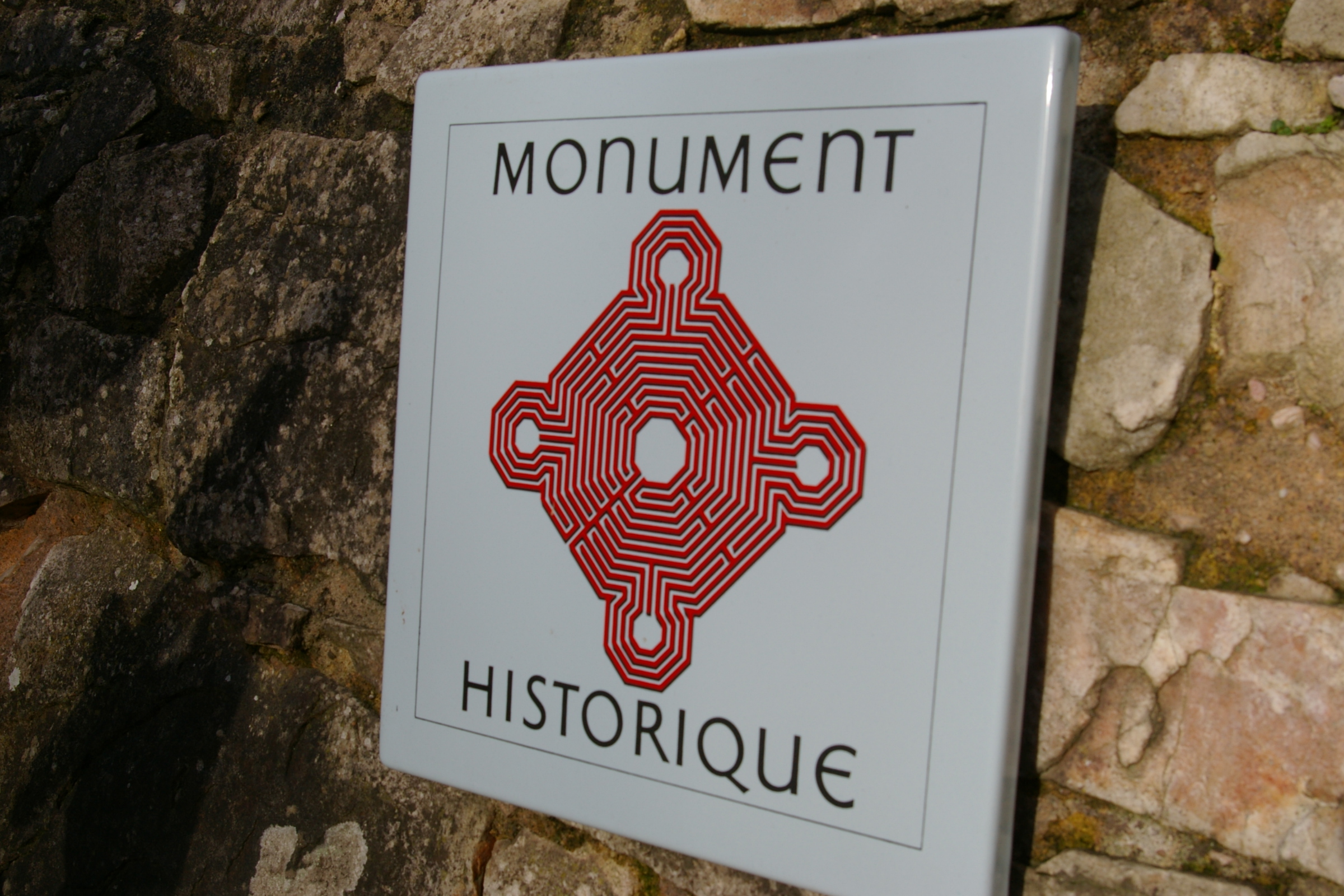
Read the exact wording, identify the awarding body and check the specific building or territory in the official record. A plaque can be a useful clue, but not every heritage sign means the building is protected as a monument historique. Nor does recognition automatically mean that visitors may enter.
This guide is for walkers, residents and curious visitors trying to interpret signs on village buildings in France. It is a method for checking recognition, not planning-permission advice or an assessment of a property's legal obligations. Sources were checked on 28 October 2026.
Start with three separate questions
When you see a heritage plaque, ask:
- What is the scheme called? Copy the full name rather than describing it as “a heritage award.”
- Who issued it? A ministry, local authority, association, foundation or another body may operate a scheme.
- What does it recognise? The individual building, a garden, a museum, a person's former home or a wider territory?
The Ministry of Culture's protections, labels and appellations directory deliberately uses several categories. That is a useful warning against treating all logos as equivalent legal designations.
A locally issued historical panel may still be informative. Its value does not depend on being a national protection. The error is not appreciating a local story; it is attributing a legal status that the panel does not claim.
Monument historique: protection, not a general compliment
The ministry's explanation of building protection distinguishes inscription and classement as two levels of protection. It also explains that protection may concern all or only part of a property—for example, particular architectural elements.
Consequently, “protected building” can be too imprecise for a detailed enquiry. Check the official wording and the extent of protection rather than assuming every room, outbuilding and boundary wall has the same status. If a legal or works-related decision depends on the answer, consult the competent heritage and planning services; a visitor's plaque-reading exercise is not enough.
Equally, an old-looking façade does not prove protection, and a modern-looking structure should not be dismissed simply because it lacks a medieval appearance. Recognition depends on the relevant record, not on a visitor's visual estimate of age.
Read the designation, then check its scope. This plaque at the Château de Sainte-Suzanne was photographed on 21 January 2007. Its wording identifies Monument Historique; the photograph alone does not specify the protection decision, its extent or today's access conditions. MontdErve, original photograph, released by the photographer into the public domain. Original unchanged, full-frame proportional display. The sign is shown for identification, not as a certification of this article.

Learn what the particular label is for
Three examples show why the exact name matters:
| Scheme | What the official explanation helps you identify | What not to infer from the name alone | |---|---|---| | Maisons des Illustres | Places preserving and transmitting the memory of notable people | That every such house has monument-historique protection | | Architecture contemporaine remarquable | Recognition of qualifying architecture under 100 years old, not protected as monuments historiques | That it is another wording for classement monument historique | | Ville ou Pays d'art et d'histoire | A territorial commitment to understanding and presenting heritage | That each building within the territory is individually protected |
The Maisons des Illustres page describes sites associated with people's lives and work and a cultural project that makes that memory accessible. It offers an official map and data route for checking recognised places. A label-related commitment to public visits is not a promise of unrestricted opening today: confirm the actual visiting arrangements.
The ministry explains that Architecture contemporaine remarquable succeeded Patrimoine du XXe siècle and concerns qualifying works under a century old that are not protected as monuments historiques. If you see an older plaque, check the current record rather than assuming the wording still describes the site's present status.
The Ville et Pays d'art et d'histoire explanation concerns communes or groups of communes and their heritage policy. A sign bearing that identity can help explain a local interpretation programme without being an individual building's protection notice.
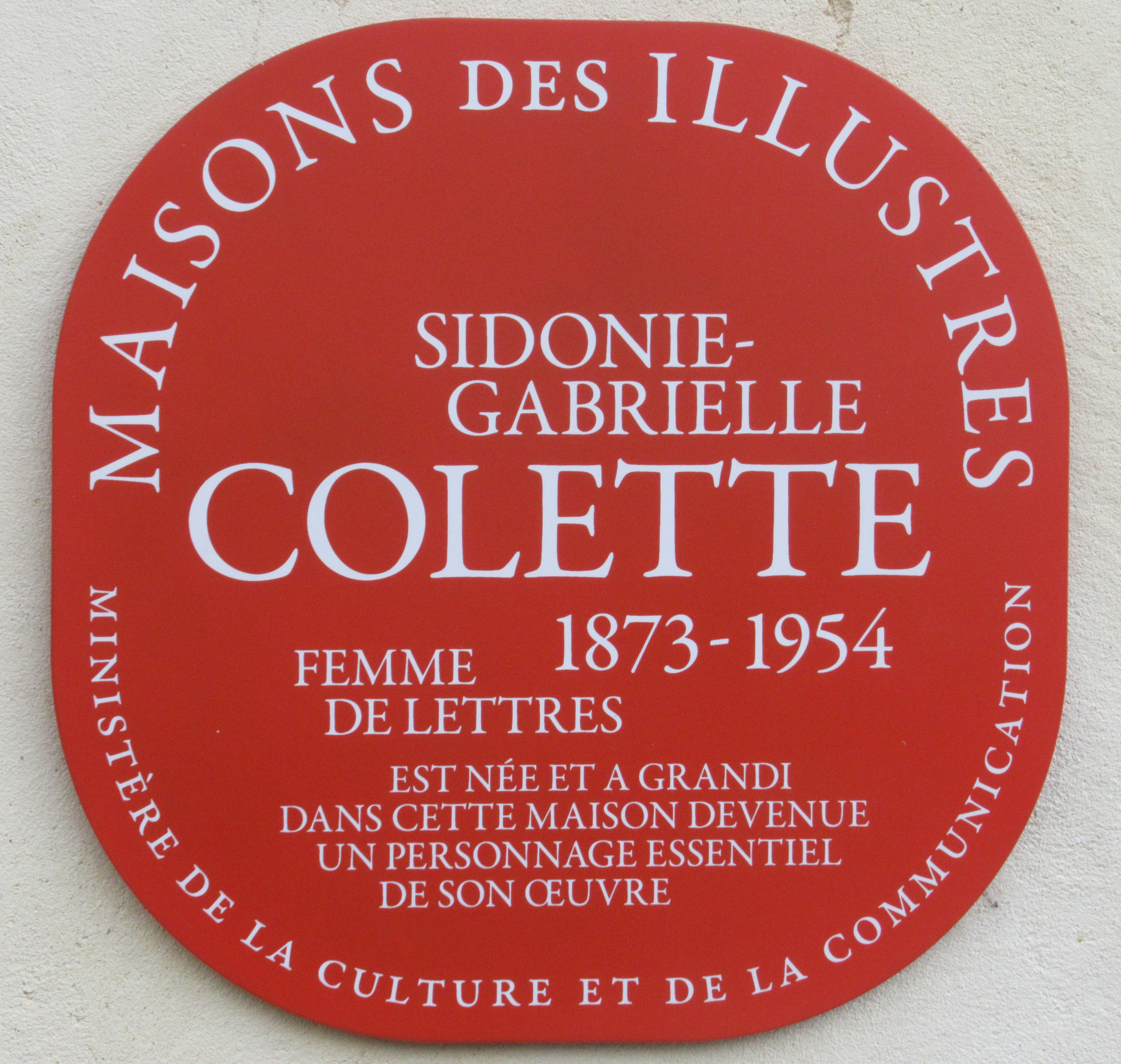
A different named scheme. The plaque at Colette's birthplace in Saint-Sauveur-en-Puisaye, photographed on 28 January 2019, names Maisons des Illustres and its ministry. Compare that wording with the Monument Historique sign above; do not infer a separate protection decision from this label alone. This is not the Saint-Léons example discussed below, nor evidence of current opening hours. Guy Prieur, original photograph, CC BY-SA 4.0. Original unchanged; no affiliation or official endorsement is implied.

Use the record that answers your question
For architectural heritage, the ministry's Mérimée database guide explains the distinction between monument-historique records, general-inventory records and architecture-label records on the POP platform. An inventory study is not automatically a protection decision.
Search using the commune and building name, then check that the address or location matches. Similar names occur in several villages; an “old presbytery” elsewhere is not evidence about the one in front of you. A building may also have more than one record because it has been studied and protected through different processes.
Record the reference, wording, date and relevant scope. Where the issue concerns protection, the underlying decision matters. Where it concerns a label, use the awarding body's current listing. Do not infer “unprotected” from a single unsuccessful keyword search: spelling, former names, commune changes or search filters may affect the result.
A real village example: Saint-Léons
A DRAC Occitanie announcement dated 18 December 2025 reports the Maisons des Illustres recognition of Jean-Henri Fabre's birthplace at Saint-Léons in Aveyron. It connects the place with the naturalist's memory and a scientific and cultural interpretation project.
That source supports a precise statement: the ministry reported recognition under this named label. It does not, by itself, establish a separate monument-historique classification, today's opening hours or the completion of every proposed visitor route mentioned in the article.
This is a useful example because the building's modest appearance is not the decisive evidence. The named scheme, official announcement and identified place are. You can appreciate the significance without adding a grander legal status or claiming to have inspected the current plaque yourself.
A fictional visitor checks before writing a caption
Alice is fictional. She sees a heritage sign beside an old village house and drafts the caption “a listed monument open to everyone.” Before publishing it, she checks what the sign actually says.
She finds that it names a cultural label, not an inscription or classement decision. She searches the relevant official listing and confirms the place. She then checks the visitor information and finds that visits require an arrangement rather than assuming an unlocked door is an invitation.
Her revised note keeps three things separate: recognition confirmed; protection status not established by that source; visiting conditions checked separately. The fictional exercise shows how a more careful caption can be both interesting and accurate.
If Alice cannot resolve the sign's meaning, she asks the municipal heritage service or the scheme's awarding body. She does not remove, alter or reproduce an official logo as though she were authorised to issue the label herself.
A compact field note for your next walk
Use these prompts in a personal notebook:
- Building name, commune and visible address or location.
- Exact plaque wording and issuing body.
- Object of recognition: building, feature, institution or territory.
- Official record or announcement, reference and date.
- Any uncertainty about current status or the extent of protection.
- Separate opening, access and photography conditions.
A photograph of a plaque can help your private checking, but publishing images raises separate rights and privacy questions. Do not photograph private interiors or people simply because a building has heritage recognition.
The strongest conclusion is often a short one: this named place has this verified recognition, under this scheme, according to this dated official source. That gives the village's heritage its due without turning every attractive sign into the same kind of protection.
Source register and limits
Official information was checked on 28 October 2026. Follow the dated source links and current local instructions before acting; this guide does not verify the current legal protection, label status or access conditions of any particular building. Historical photographs are illustrations, not live permission or operational evidence.