Free · France
Why Lunch Shapes the French Day
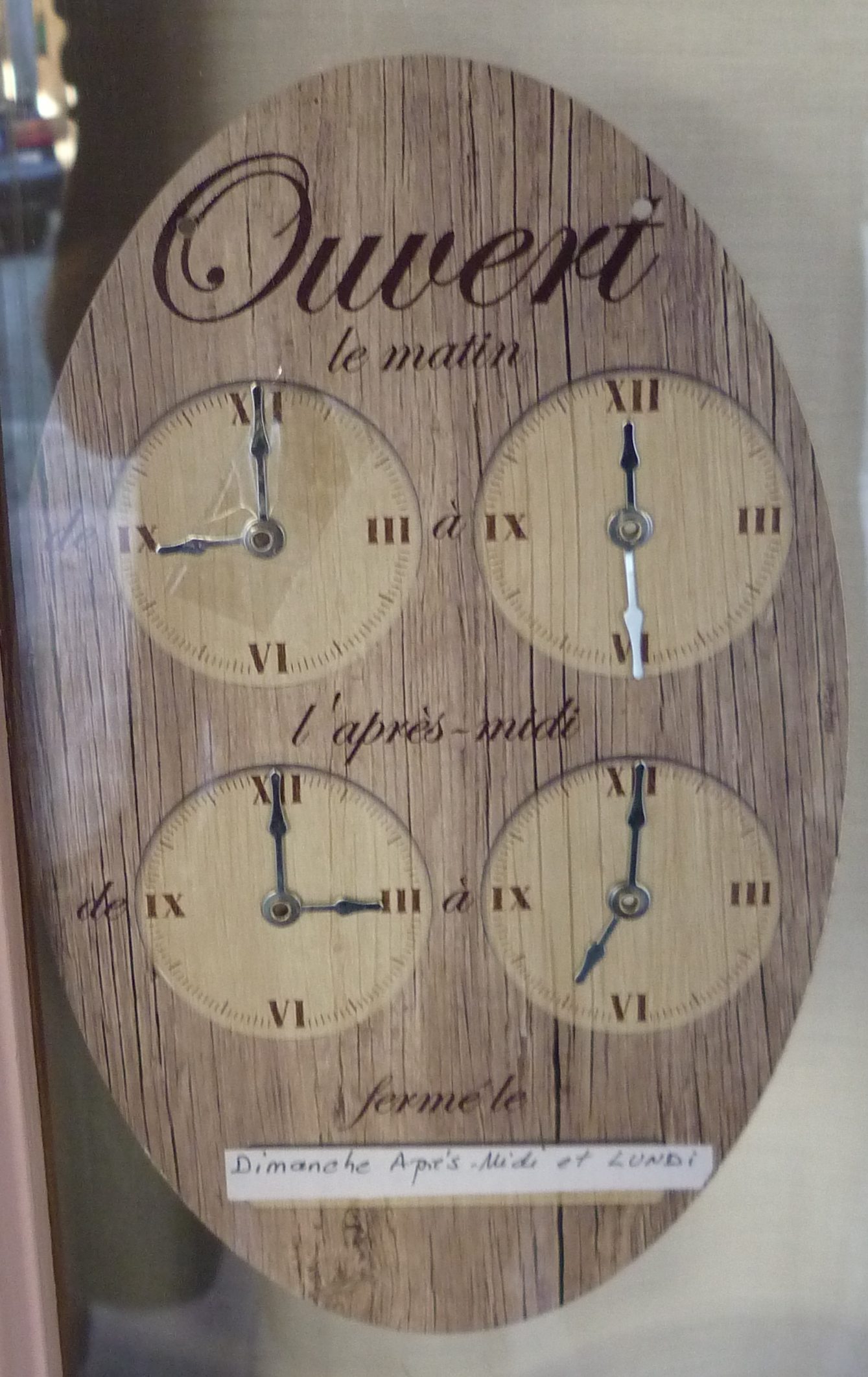
Lunch is not only something to fit between the morning and afternoon. It can also help define where one ends and the other begins: when people expect to meet, when a service operates, or when a shared activity pauses.
That is a more useful starting point than the familiar picture of an entire country sitting down for a leisurely two-hour meal. A recurring social rhythm does not mean identical schedules, equal freedom to take a break, or a single correct way to eat.
The question is not “Do French people always stop for lunch?” It is “Whose timetable is this meal organising?”
A shared hour is not a shared length of lunch
There is evidence behind the idea of a concentrated midday meal. In INSEE's 2009–2010 time-use survey, its published graph shows 48% of adults aged 18 and over in metropolitan France eating at 13:00. The study appeared in 2012. This is a historical snapshot of simultaneous eating, not a measurement of today's routines or a statement that lunch lasted two hours. INSEE, Le temps de l'alimentation en France, graph 2 and survey notes.
Think of the distinction this way: several people can pass through a station at the same time without making journeys of the same length. Likewise, a common meal window does not reveal when each person started, when they finished, whom they ate with, or how much control they had over the timing.
The useful cultural insight is coordination. When a meal is a recognisable reference point, “before lunch” and “after lunch” can organise a conversation about the day. But those expressions remain approximate until the people involved agree on an actual time.
Four different clocks can be hiding inside “lunchtime”
It helps to separate four things that are easily blurred together:
| The clock | What it describes | What it does not establish | |---|---|---| | Eating time | The time a person spends having a meal | Their whole break or availability afterwards | | Midday break | A gap between organised activities | Two uninterrupted hours at the table | | Service window | When a particular place serves food | Everyone's preferred mealtime, or entry without a booking | | Shared occasion | Time people agree to spend together | An obligation to stay indefinitely or follow one menu |
This is a reading aid, not an official classification. Its purpose is to prevent a broad cultural expectation from replacing the specific information you need.
A person who says they have an hour for lunch may need to include a walk, a queue and the return journey. Someone inviting you to lunch may be offering a shared afternoon—or just a short meal. Neither interpretation can be settled by nationality alone.
Two opening sessions are visible; nobody's eating time is. This historical sign is useful precisely because a midday gap does not establish how long anyone spent at lunch. Alistair Paterson (Alpat), “12.30 to 3.00 Lunch time closed South West France,” owner-reported date 9 May 2011; exact shop and town unestablished. Original photograph, CC BY-SA 2.0, unchanged. Not current opening information.
Institutions give the pause a visible shape
The City of Paris's school guidance for 2026–2027 provides a concrete example. It describes a midday period from 11:30 to 13:30, with supervised activities and play before and after the meal. That two-hour period is not described as two hours spent eating. This is a Paris example, not a national school timetable. Ville de Paris, Activités périscolaires, “Le temps du midi”.
The distinction matters beyond reading a timetable correctly. A meal can be one part of a larger organised interval: eating, moving between spaces, resting, playing or preparing to resume the day. Calling all of that “lunch” can hide the work of organising it.
For a family reading a particular school's information, the relevant questions are therefore concrete: When does the midday arrangement begin and end? Which parts concern eating, supervision or collection? The cultural background helps explain why this interval deserves attention; only the actual school information answers those practical questions.
A valued meal is not necessarily a ceremonial one
The Agriculture Ministry's account of the 2010 UNESCO recognition of the gastronomic meal of the French emphasises a social practice associated with important celebrations and being together. That heritage description concerns a festive occasion; it is not a prescription for every weekday lunch. Agriculture Ministry, Le repas gastronomique des Français, 25 March 2019.
Keeping those scales separate makes everyday life easier to understand. A meal can matter because it creates time with someone, without being elaborate. Conversely, a long celebration tells you little about the host's ordinary working Tuesday.
Do not use a heritage description as a test of whether another person's lunch is sufficiently “French”. A sandwich, a packed meal, an individual break or a meal without alcohol does not require a cultural apology. Nor does valuing shared time make an invitation compulsory. The meaning of an occasion is something to discover with its participants, not impose on them.
There is more than one working day
A study published by INSEE in November 2025, using the 2019 Conditions de travail survey, distinguishes working patterns including early starts, evening or night work, split hours and long hours. Its scope is employees in metropolitan France living in ordinary households. This is evidence of varied work schedules, not a direct measurement of when those workers ate lunch. INSEE, Horaires de travail atypiques, study and source notes.
The implication for a visitor, colleague or new neighbour is modest but important: do not assume that a conventional midday window belongs to everyone. It would be equally mistaken to treat a different schedule as evidence that somebody rejects shared meals.
Instead of asking whether someone follows “the French routine”, ask what their day allows. That keeps the conversation about the person in front of you rather than about how well they match an image of the country.
Three small situations, three different lessons
The following scenes and wording are invented illustrations, not reported encounters or typical schedules.
1. An invitation with an uncertain end
A neighbour proposes lunch at 12:30. You have another commitment at 14:00. The invitation supplies a starting time, not a promise that everything will fit around your next appointment.
Say so before accepting: Avec plaisir. Je dois partir à 13 h 30 ; est-ce que ça vous convient ? — “I'd be glad to. I need to leave at 1:30; would that work for you?”
The useful outcome is an agreed shape for the visit. If it does not fit, another day is a better answer than arriving with an unspoken deadline and treating the host's pace as a national failing.
2. A door is open, but the meal service is uncertain
You reach an unfamiliar café after a delayed journey. Its open door tells you that entry may be possible; it does not tell you what the kitchen is serving at that moment.
Ask the relevant question: Est-ce que vous servez encore à déjeuner ? — “Are you still serving lunch?” If the answer is no, ask what, if anything, is available rather than arguing from a general expectation about French mealtimes.
This scene does not establish any real café's hours. It shows why a service question is more useful than a cultural guess.
3. Two colleagues have different breaks
One colleague can meet at midday; another cannot leave their duties then. A proposal to eat together has not yet become a workable plan.
Compare the actual intervals, including time needed to get back. If they do not overlap, arrange another occasion or leave the invitation open. Do not turn an unavailable time into an assumed lack of friendliness, and do not treat joining the meal as a test of belonging.
Read the rhythm, then check the particular day
Before making lunch the anchor of your plans, establish:
- Whose time is involved? Your own meal, someone else's break, a household invitation or an institution's programme?
- What is actually fixed? An agreed meeting time, a published service window, a required return—or only a vague “after lunch”?
- What still needs checking? The relevant day, place, duration, available food or arrangement for leaving?
You do not need to reconstruct a national lifestyle to answer those questions. Start with the actual people and place.
Lunch shapes the day most clearly when it gives people a common point around which to organise other things. The insight is not that France pauses in unison. It is that a meal can be part of the day's social structure—and that understanding the structure still leaves room for individual needs, unequal constraints and different ways of living.