Free · France
Le Puy-en-Velay: Lace-making as a local household industry
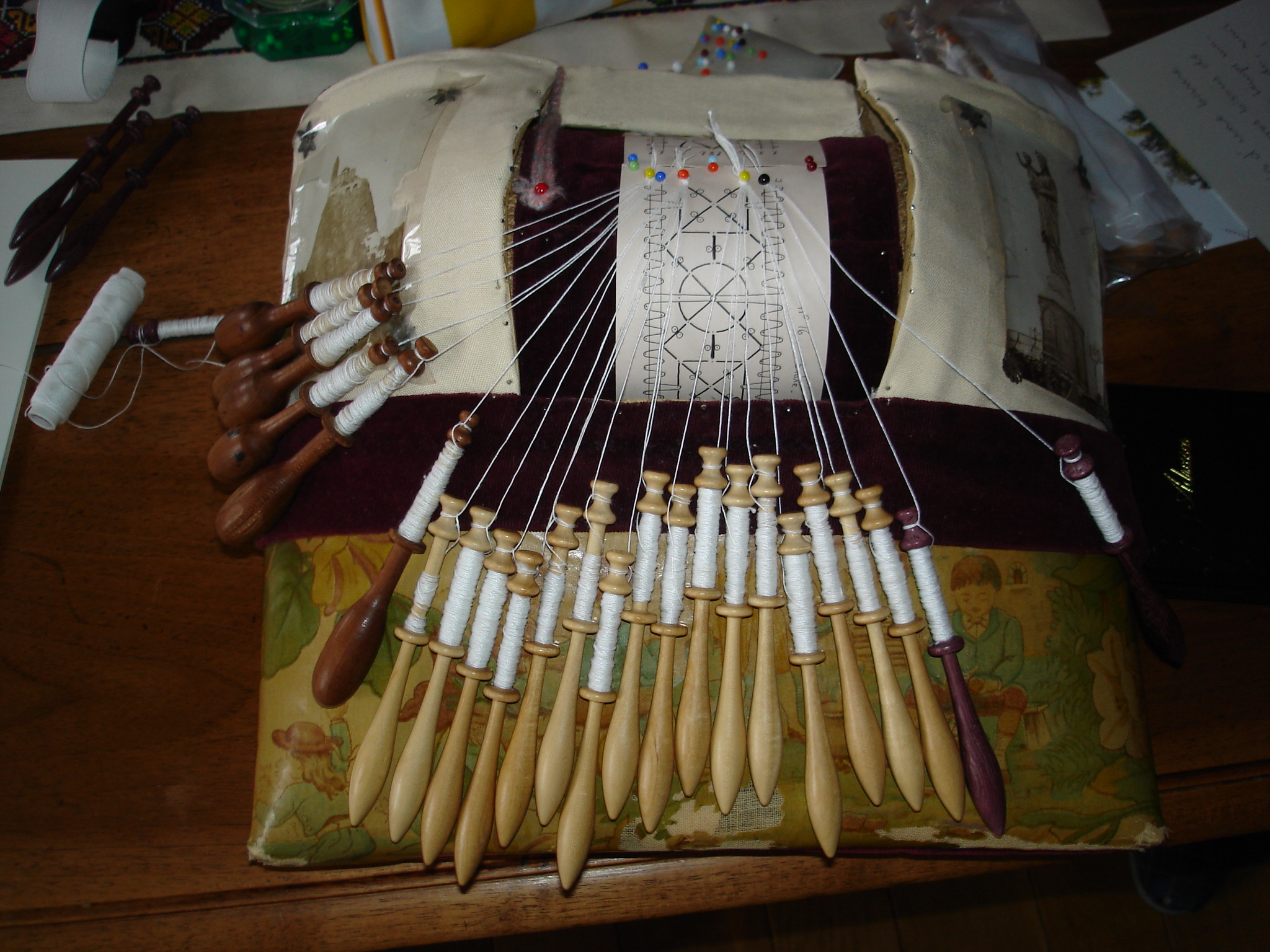
A lace pillow looks like a small workplace. It is also a useful way to rethink the word industry. The finished threadwork may be delicate and the equipment portable, yet neither quality tells us whether its maker controlled the design, found the customer or set the price. To understand lace around Le Puy-en-Velay, look beyond the picturesque image of a woman sitting at her doorway. Ask how her work connected a household to teachers, manufacturers, collectors of finished pieces and buyers.
The surviving evidence is uneven. Le Puy's museum presents objects and representations; its heritage service explains village institutions; a regional industrial inventory records a factory; nearby Retournac preserves manufacturing collections and workers' recollections. These sources do not describe one unchanged system. Read together, they show why home production, organized training and mechanized manufacture belong in the same local history without being interchangeable.
Start with the hands, not a legend of invention
The Mobilier national describes Le Puy lace as bobbin lace. Threads unwind from small wooden bobbins and are crossed and interlaced following a pattern; pins hold the emerging work on a pillow, or carreau. Historical pillows and contemporary flat working surfaces differ. Its account places the craft firmly in the Velay from the seventeenth century, without requiring a single miraculous founding moment. Source: Mobilier national, technique and history.
Think of the pillow as equipment that organizes attention. A pattern is not the same thing as the object being made: the worker must translate it through an ordered sequence of movements. An elegant finished edge conceals that sequence. For a museum visit, the most useful first question is therefore not “How old is lace?” but “Which part of this apparatus carries the design, and which part holds the work while it grows?”
That question also prevents a common mistake: treating portability as proof that the work was casual. A workplace can fit within a household and still demand concentration, repeated practice and coordination with people elsewhere. Conversely, an old pillow does not by itself establish its owner's annual income, hours or employment relationship. Those are documentary questions.
Equipment makes the sequence visible. Follow the threads from the bobbins towards the pinned pattern. This photograph illustrates the apparatus, not a documented worker's wages or the museum's 500-bobbin exhibition object. Daniel Giffard, Carreau du Puy, 2008, CC BY-SA 3.0. Original photograph unchanged. The file description and camera metadata give different days in 2008, so no precise capture day is asserted here.

The household was part of a village institution
The local Pays d'art et d'histoire explains the maison d'assemblée: a village building combining teaching and work spaces with accommodation for a béate. These devout women taught children, transmitted lace-making skills and supported religious life; residents supplied their lodging and subsistence. The service notes that many assembly houses have since become homes or communal rooms. This is a Velay-wide account, not proof that every house in Le Puy served that function. Source: local heritage service, small-scale built heritage.
This changes the meaning of “household industry.” Home and community were not opposites. Skills could be practiced within a family yet learned and reinforced through a shared institution. Nor should the assembly house be reduced to a quaint craft room: its educational and religious purposes mattered alongside work.
When looking at a surviving building, separate its historical function from its present use. An exterior may help explain the institution; it does not give permission to enter a home. Equally, an attractive reconstructed interior cannot tell us how every worker experienced its discipline or instruction. The question to carry forward is whose account survives: the institution's, a maker's, or a later curator's.
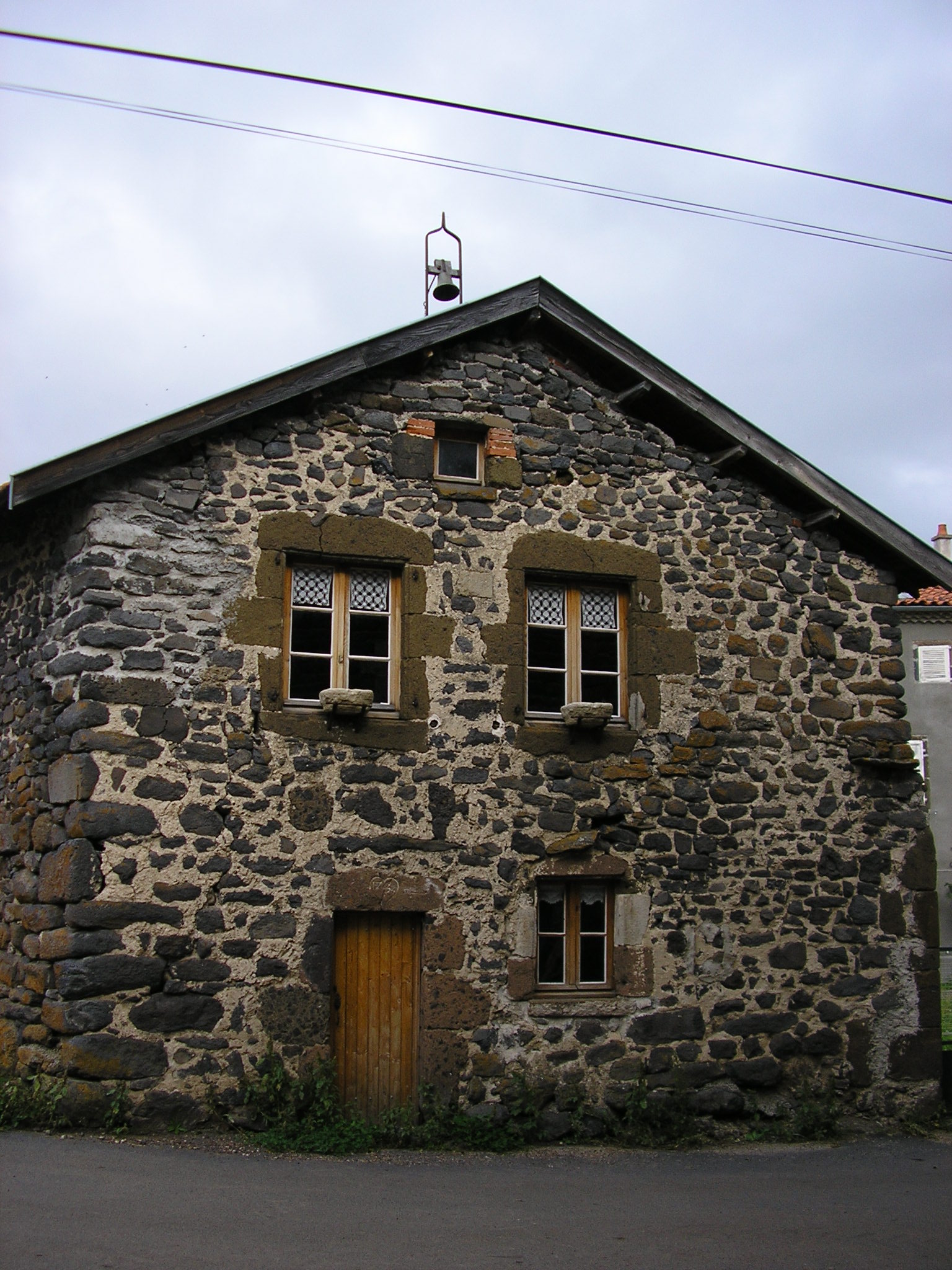
A regional institution had a building. This is the maison de la béate at Civeyrac, a separate village example—not a Le Puy household or the Dentelle au Foyer school. Its exterior provides a material comparison for the regional institution described above; it does not document a particular lesson or grant access today. Clodion, Maison de la béate de Civeyrac, uploaded 25 October 2006 (capture date not established), CC BY-SA 3.0. Original photograph unchanged.

Follow a piece beyond the pillow
Retournac is a separate town, not a district of Le Puy. Its Musée des Manufactures de Dentelles is nevertheless a valuable regional comparison because it preserves the Claire Experton and Auguste Experton manufacturing collections. Its permanent displays connect design, production and sale, and include mechanical equipment retained in its original setting. A section on workers draws on oral-history interviews collected between 1996 and 2001. Source: museum's permanent collection route.
The museum's documentation service lists accounts from people in distinct roles: home and workshop workers, designers, accountants, supervisors, machine workers and leveuses. This variety is more revealing than a single anonymous label saying “traditional craft.” It points towards a division of work whose relationships need to be reconstructed, not assumed. Source: museum's documentary resources.
For an individual piece, try making a chain of questions: who devised its pattern; who supplied its materials; who made it; who assembled or checked it; who sold it? Leave a link blank when no record answers it. The result is more informative than filling the gaps with an imagined self-sufficient cottage worker. The evidence consulted here identifies documentary resources; it does not include a newly examined household account book or an interview conducted for this article.
Three objects, three different kinds of testimony
The Musée Crozatier's Velay collection includes Léon Giron's La Dentellière d'Espaly, dated around 1880, and a pillow equipped with 500 bobbins for the 1889 universal exhibition. These are not equivalent samples of ordinary daily production. The painting is an artist's representation; the exhibition object invites questions about exceptional skill and public display. The museum also places local lace beside examples from other European production centers. Source: Musée Crozatier, Galerie du Velay.
A third object makes commemoration explicit. Charles Borie's lace-themed stained glass, inaugurated in the museum in 1937, portrays Jean-François Régis, manufacturers and Anne-Marie Martel. The museum explains its religious and institutional imagery, including the link between a worker and her wealthy client. Source: museum's individual stained-glass record.
Read that window as a statement about whom the community chose to honor. It is not a transparent record of wages or bargaining power. Likewise, neither a posed image nor a spectacular tool should stand in for all the less visible workers. Beautiful objects can open a social history, but they cannot answer every question in it.
Why a household industry needed a substantial school
The Ministry of Culture's record for La Dentelle au Foyer gives a concrete urban counterpoint to the domestic pillow. A support and training society was founded in 1905; Achille Proy's building, begun in 1908 and inaugurated in 1910, housed advanced instruction for apprentices. The record locates it at 4 avenue de la Dentelle and describes decorative work by Charles Borie and Joseph Bernard. Source: architectural record PA00092956.
The building suggests a useful distinction between preserving an object and supporting the conditions in which skilled people can work. A collected pillow survives without its original trade. A teaching institution addresses the transmission of knowledge. These are related achievements, but one does not guarantee the other.
Later interventions changed the institutional setting again. The Mobilier national established its state workshop in 1976, and describes its present mission as sustaining highly skilled bobbin-lace work through contemporary designs. This is not simply an old household economy continuing unchanged. Source: Mobilier national.
Do not edit the factory out of the story
The regional inventory identifies the former Fontanille works in Le Puy as a mechanical-lace factory. It dates the surviving buildings to around 1903 and records their conversion to housing in 2011. Their shed-roof industrial form belongs to a different work environment from the portable pillow. The inventory is evidence of a particular site and its reuse, not a current visitor-access invitation. Source: regional industrial inventory IA43000693.
The contrast matters because “local lace” can name products made through different processes. Do not infer handmade production merely from a town name, an old brand or a decorative motif. Nor should a former factory be treated as evidence that handwork vanished at a single date. Buildings, tools and testimony answer different questions; their coexistence is more useful than a simple before-and-after tale.
A practical way to read the evidence
| Evidence encountered | Question it can help answer | Conclusion to avoid without more evidence | |---|---|---| | Pillow, bobbins and pattern | How was work physically organized? | What a particular worker earned | | Assembly-house interpretation | Where did instruction and community life overlap? | Every household followed one model | | Manufacturer's documentation | Which people or stages connected production to trade? | Every maker had the same contract | | Painting or commemorative window | How was lace work represented and celebrated? | The image reproduces an ordinary day exactly | | Converted mechanical factory | How did industrial buildings change use? | All lace from the town was machine-made |
For a focused visit, start with one tool and one representation, rather than trying to identify every lace style. Write down the object's date and the date of the interpretation separately. Then ask which missing document would most improve your understanding. A payment record might address income; a pattern book might reveal design choices; a worker's testimony might explain learning or routine. Those are different research tasks.
The Crozatier collection page, rechecked on 28 October 2026, warns that its Velay gallery is not accessible during exhibition dismantling and directs visitors to lace collections in a ground-floor exhibition. Treat that as a reason to check the museum's current arrangements, not as a permanent closure or a guaranteed future display. Source: museum collection page.
For geographical orientation, the address search for 4 avenue de la Dentelle, Le Puy-en-Velay uses the Ministry's recorded address. It is not a verified entrance pin or confirmation that the building is open. Retournac requires a separate journey; do not present its collections as another room in the Le Puy museum.
The most rewarding way to understand this craft is to keep the small tool and the wider network in view together. The pillow shows where threads met. The school, collection, factory and documentary archive help explain how people, knowledge and goods met around it.
Source register and limits
Museum and heritage descriptions, Mobilier national, Ministry architectural records and regional industrial inventory were consulted remotely. Original household ledgers, worker interviews and archive files were not inspected. Retournac remains a separate regional comparison, not a Le Puy neighbourhood. The Borie window’s inauguration date is distinct from the overview’s date; no disputed institutional foundation date is invented. The gallery notice is a dated check, not guaranteed future access. Both CC BY-SA photographs retain original bytes and attribution: the pillow caption uses only 2008 because capture-day metadata conflict, and the Civeyrac date is upload, not asserted capture. No pictured household or wage history is inferred.