Free · France
Saint-Antoine-l'Abbaye: Abbey complex and medieval medical communities
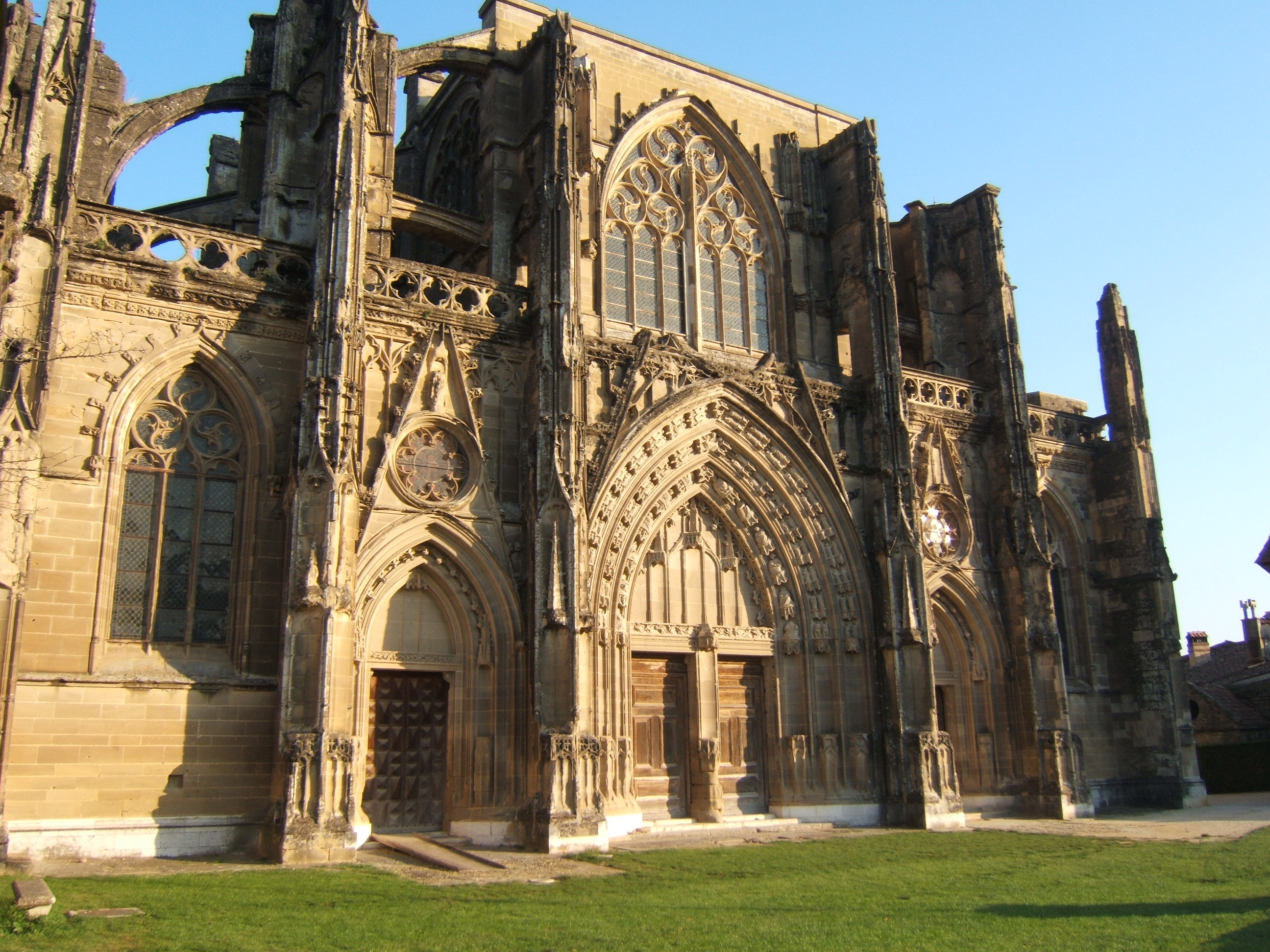
The most important hospital-history question at Saint-Antoine-l'Abbaye is not “Which room was the medieval ward?” It is “What survives, what disappeared, and how do we know the difference?” The abbey church dominates the village, while the museum occupies former conventual buildings. Neither fact makes every surviving chamber a medieval treatment room.
A useful reading of the complex begins with people and institutions rather than a picturesque façade: pilgrims seeking a saint's help, people needing shelter and care, the religious community organizing that care, and the town developing around them. It also requires a distinction between medieval beliefs about healing and present-day medical knowledge. This is a history of a place and its community, not advice on using historical remedies.
A destination in its own right
The departmental museum describes Saint-Antoine as the mother house of the Hospitaliers of Saint Anthony, an order whose reach extended across Europe. It emphasizes that the village was a pilgrimage destination in its own right, not merely a stopping place on a longer route. The attraction of the saint's relics brought sick people and pilgrims; places of hospitality developed around that movement. Source: Musée de Saint-Antoine-l'Abbaye, historical site.
The distinction matters. A route map draws a line through a place, but a destination gathers people into it. To understand the abbey's setting, imagine the questions that such arrivals created: who could enter, where could they stay, and which institution took responsibility? These are questions for historical evidence, not an invitation to invent a typical patient's itinerary.
The museum's permanent Chroniques d'une abbaye exhibition follows the history from the eleventh-century arrival of relics through the order's growth and decline. Its presentation joins religious and political history to the history of care. A digital construction film covers 1070–1490: that is the stated span of an interpretive reconstruction, not a claim that every visible wall belongs to those dates. Source: current permanent-exhibition description.
Surviving religious architecture. The church portals make an imposing entrance, but this photograph does not show a hospital ward or document a patient's route. Denis Gounele (Groumfy69), Portail Eglise Abbatiale, November 2005; photographer's public-domain dedication. Original photograph unchanged; the historical view is not a record of current conservation or entry arrangements.

Hospitality came before the modern hospital category
A research-based museum publication prepared for the 2018 exhibition Vous avez dit mandragore ? describes an early charitable house offering food and lodging to poor pilgrims, some of them ill. It records hospital building from 1256 for people afflicted by the condition associated with Saint Anthony's fire. Crucially, it also states that the historic hospitals at Saint-Antoine itself have disappeared; the Grand Hôpital, damaged during the Wars of Religion, was demolished in 1655. Source: museum's 2018 publication, section on Antonine hospitality.
This prevents an appealing but misleading story in which today's complex is an intact medical campus. Surviving religious architecture and a documented history of hospital care are not the same as surviving hospital wards. Absence is part of the interpretation.
It also changes how we use the word hospital. The historical institution combined purposes that modern visitors may mentally separate: shelter, subsistence, religious observance and care. Rather than asking whether it was “really” a monastery or “really” a hospital, ask which functions were associated and how their responsibilities were organized. A building label alone cannot answer that.
Name the illness without turning a belief into a cure
Local civic interpretation associates the mal des ardents, or Saint Anthony's fire, with ergotism. Modern food-safety sources explain that ergot fungi can contaminate cereals and produce toxic alkaloids. That is a different explanatory framework from seeking healing through a saint's relics. Sources: municipal history; French Academy of Agriculture, ergot and its alkaloids.
Keep the two frameworks visible rather than translating one invisibly into the other. We can describe a community's confidence in relics without presenting miraculous healing as a medically verified event. We can also recognize that people sought practical help without assigning modern clinical training or effectiveness to every historical intervention.
For readers, an especially useful discipline is to separate three sentences: “People believed this would help”; “A source records that this was done”; and “Evidence establishes that it works.” They are not interchangeable. No plant recipe, dosage or treatment recommendation belongs in a visit-based account of this site. A historical display is a prompt to understand past practice, not to reproduce it.
Read the courtyard in layers
The museum identifies the great abbey courtyard as a place of burials and processions until the end of the sixteenth century, while the regular buildings around it reflect seventeenth- and eighteenth-century classicism. The same view therefore combines different periods and uses. Source: museum's historical-site account.
Try looking twice. First, notice the architectural order visible now: entrances, façades and the arrangement of open space. Second, ask which of the earlier activities can actually be read from the surface without a guide or plan. The difference between those two observations is the work interpretation must do.
A spacious court does not tell you how many people were treated. A decorated interior does not establish what a patient could access. Nor does a medieval institution's origin make a later façade medieval. This is not skepticism for its own sake; it is how a complicated site becomes more interesting than a single period label.
The Ministry of Culture's protection record names the ensemble as a former abbey with a town-hall use. That institutional afterlife deserves attention too: a monument can retain traces of a religious community while participating in a different civic world. Source: POP architectural record PA00117247.
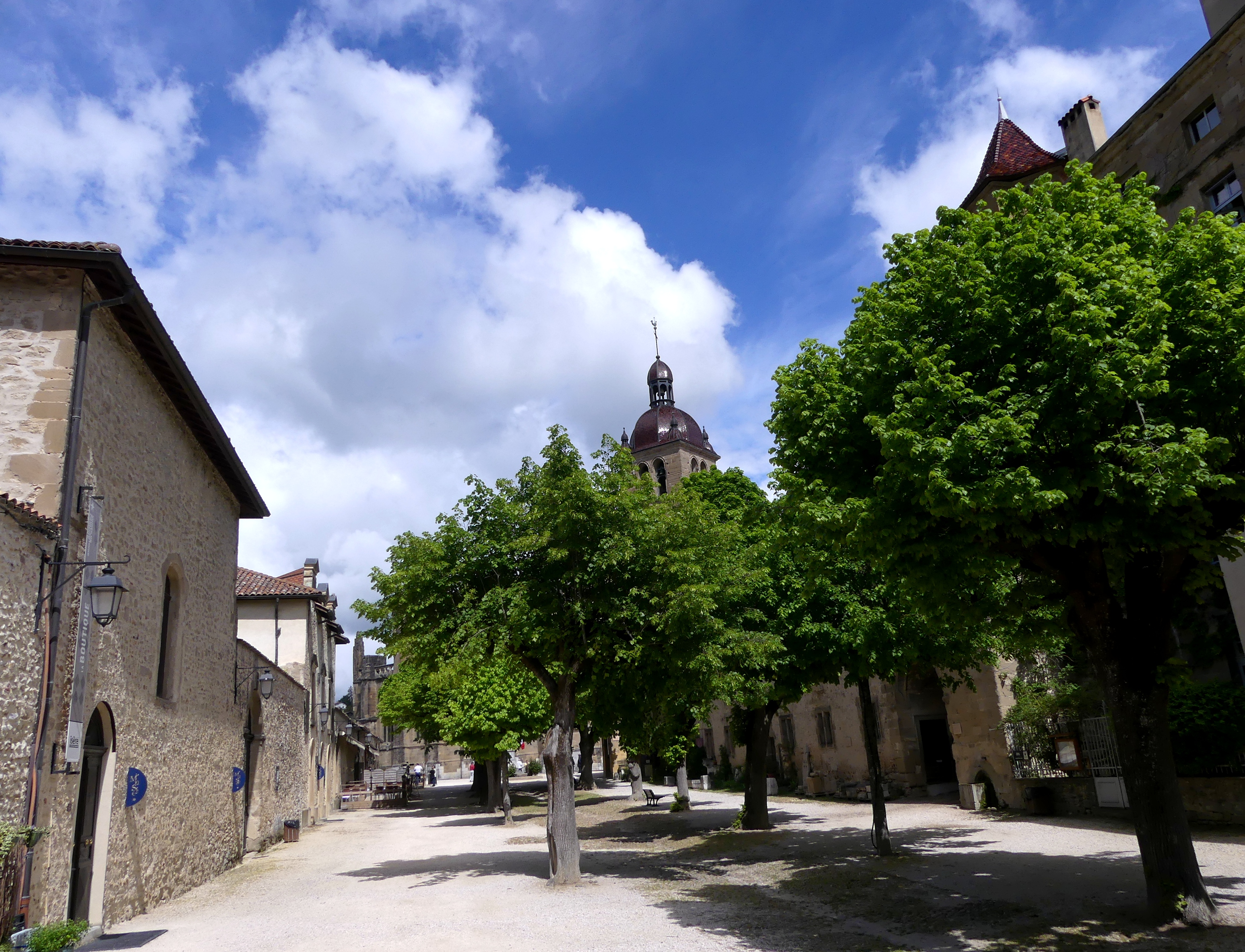
An open space with more than one past. This view from the great courtyard shows its built edges and surface as photographed in May 2023, not the earlier burials, processions or vanished hospitals described in the historical record. Florian Pépellin, Grande Cour de l'abbaye de St-Antoine-l'Abbaye, 11 May 2023, CC BY-SA 4.0. Original photograph unchanged; no current access promise.

The archive is not the museum label
The Isère departmental archives' published inventory of the Chaper collection lists Antonine material under J 577* and J 578. The former identifies a register begun in 1660 organizing abbey and order documents; the latter groups acts, letters and other records. This is an accessible route into institutional evidence, but the inventory is not the documents themselves. Source: Archives départementales de l'Isère, Chaper inventory, PDF page 26.
Why does that distinction matter to an ordinary visitor? Because it exposes the steps between a building, a historical assertion and the evidence behind it. An inventory can tell a researcher where to look. It does not by itself establish the result of reading a particular letter, still less the experience of a named patient.
A productive question for a guide or museum label is therefore: “What kind of source supports this?” A construction record, a later history, an image and a patient's account offer different perspectives. You do not need to become an archivist to notice when those perspectives have been collapsed.
A museum in reused buildings, not a frozen institution
The departmental museum explains that it has occupied former conventual buildings under departmental ownership since 1979, with further acquisitions in 1997–1998. Its historical interpretation developed alongside an art collection. The Noviciat houses Chroniques d'une abbaye; the Grandes Écuries hosts a separate history-of-perfume exhibition. Other rooms open only on particular occasions. Source: museum's institutional and visitor overview.
These names help orient a visit but should not be turned into a reconstructed patient route. “Noviciat” refers to a religious training function; a modern display inside it does not make it a medieval pharmacy. Likewise, the perfume exhibition's broad historical scope should not be read as a catalogue of substances administered in every local hospital.
Current visitor information also distinguishes access arrangements among spaces. Plan for the part you want to understand rather than assuming one opening time covers the church, museum, exceptional rooms and treasury. The local tourism office says the Trésor des Antonins is accessible through guided visits. Check its current arrangements rather than expecting unrestricted entry. Source: local tourism office.
A compact observation method
| What you encounter | Useful question | What it cannot establish on its own | |---|---|---| | The abbey church | How was pilgrimage expressed architecturally? | Every visitor's reason for coming | | Great courtyard and later façades | Which dates and functions belong to this view? | A single unchanged medieval layout | | Hospital-history display | Which lost buildings does the interpretation reconstruct? | That the room containing the display was a ward | | Archival inventory reference | What surviving documents could test a claim? | The contents of records not yet examined | | Historical treatment description | Is this recorded practice, belief or demonstrated effect? | A safe or effective modern treatment |
Choose one assertion from the exhibition and classify it: directly surviving fabric, documentary evidence, historical interpretation or modern reconstruction. Then ask what would strengthen it. An exact date may need a building account; a claim about daily care may need a rule, a financial record or testimony. No one source is required to answer everything.
For orientation, the museum lists its location as Le Noviciat, 38160 Saint-Antoine-l'Abbaye. This place-name map search is not a tested entrance pin, a step-free route or confirmation of access to every abbey building. Consult the department's current museum information for the spaces and arrangements relevant to your visit.
Saint-Antoine is most revealing when its impressive surviving architecture is read alongside what is no longer there. The abbey, town, documentary record and museum do not offer four copies of the same story. Together they show how a community organized hospitality and care—and how later generations preserved and interpreted its traces.
Source register and limits
Departmental museum interpretation, its 2018 publication, Ministry architectural records and the Chaper archive inventory support this account. Underlying J 577*/J 578 records and patient accounts were not inspected. Surviving conventual rooms are not identified as vanished hospital wards; the 1070–1490 film is interpretive reconstruction. Historical belief is not modern treatment evidence. Both original photographs retain dated captions and rights credits, and neither certifies present access. Visitor arrangements and the untested map search require a current check.