Free · France
When France May Ask for a Certified Translation

Confirm the receiving authority's requirement before paying to translate a document.
A document can be perfectly readable to you and still arrive in a form that the receiving administration cannot use. Perhaps it is in another language. Perhaps the procedure asks for a translation by an approved professional. Or perhaps a multilingual form would avoid the need for a separate translation at all.
The first step is not to translate everything in your folder. It is to identify the document, the procedure and the authority receiving it. “It is a foreign document” is not enough to determine every requirement. Nor does a translation that looks polished automatically satisfy a formal requirement.
This article explains the questions to resolve before commissioning work. It is general administrative orientation, not advice on an individual file, a translation service or a guarantee that a document will be accepted.
Start with the request, not a provider's promise
Find the current official instructions for the exact procedure. Record the document title, its country of issue, its language and the receiving authority. Then look for wording about translation, the translator's qualification and any accepted alternative.
An original decision note can be very short:
- Requested document: the exact item, not a rough English description.
- Issuing authority and country: where this particular document came from.
- Receiving procedure: the named French process and official source.
- Language requirement: what the instructions actually say.
- Open question: the point that still needs clarification before spending money.
Do not turn an unknown into an assumption. A friend's experience may concern a different document or procedure. A commercial service's general claim that its work is “certified” is not a substitute for checking the qualification accepted by the receiving authority.
What “approved translator” means in the French guidance
Service Public explains that, in France, a traducteur agréé is a judicial expert registered on lists maintained by courts of appeal or the Cour de cassation. Its translation guide directs readers to those lists and distinguishes arrangements in France from those abroad. For work arranged abroad, consult the relevant official consular guidance rather than assuming the French domestic route applies unchanged.
The official expert-search entry point links to the court resources. It distinguishes the free search process from the professional service, which is paid. Verify the actual professional and relevant language qualification; do not rely solely on a directory advertisement or a familiar-looking seal.
This is a qualification question, not a judgment about whether you or a bilingual friend understands the text. Where an approved translation is required, a personal rendition or machine-generated version should not be represented as carrying that professional status.
Historic Lyon courthouse, 15 November 2015. Photo: Fred Romero, CC BY 2.0. Unmodified original. Judicial-institution context, not proof that a particular translator is registered or that the pictured building validates a particular translation.
Some EU public documents have a different route
EU rules simplify the circulation of certain public documents between member states. They do not cover every document that happens to come from Europe.
The official Your Europe guide describes areas such as birth, marriage and residence. Within the applicable framework, an accepted language can remove the need for an official translation. In other cases, a multilingual standard form issued with the public document can serve as a translation aid. A receiving authority may exceptionally request a certified translation if it cannot fully understand the contents. The guide also separates document authenticity from recognition of the document's legal effects.
The e-Justice forms FAQ adds important boundaries: the form has no independent legal value and should be requested from the authority that issued the document. It is not a form you create for a document issued outside the EU. Private recipients not acting as public authorities or otherwise authorised to receive the document are not necessarily bound by this regime.
The practical question is therefore specific: does this document, this issuing country and this receiving use fall within the relevant arrangement? Do not extend an answer about an EU birth record to a private contract or assume that every university, employer or bank must follow the same route.
Translation is not legalisation or an apostille
These terms address different issues. Translation makes the content available in another language. Legalisation concerns formal features such as the signature, the signatory's capacity and, where relevant, the seal or stamp. Depending on the document and international arrangements, an apostille or an exemption may apply instead.
Service Public's foreign-public-document guidance explains these distinctions and points to the official country-specific information. It also states that, where its legalisation procedure applies to a foreign-language public document, the French translation by an authorised translator precedes the legalisation steps.
Do not assume that paying for one service completes the other. Equally, do not purchase an authentication service merely because a document is foreign: first establish whether that formality is required or exempt. A translation should not be described as making the underlying document authentic or conferring the legal effect you hope to obtain.
Specify the job before requesting a quotation
Once the requirement is established, give the professional enough information to quote for the correct task. The following is an original preparation checklist, not a statutory form:
| Point to resolve | Why it matters for your order | |---|---| | Exact source document | The translation must correspond to the version you will actually use. | | All relevant pages | Reverse sides, annexes, marginal entries and stamps may be part of the document; do not omit them without checking. | | Receiving authority and procedure | The provider needs to understand the formal use, not merely the target language. | | Accepted delivery format | Ask what the recipient requires and what the provider will deliver; do not assume a scan and a signed original are interchangeable. | | Additional formalities | Clarify any separate authentication steps and responsibility for them. | | Price, timing and corrections | Agree the scope and how a genuine transcription error will be addressed. |
Do not claim that a provider has guaranteed acceptance unless that is actually part of an explicit, reliable agreement—and remember that the receiving authority makes the administrative decision. Preserve the original document and the instructions you supplied. If its information is wrong, translating it differently is not a legitimate way to amend the source record.
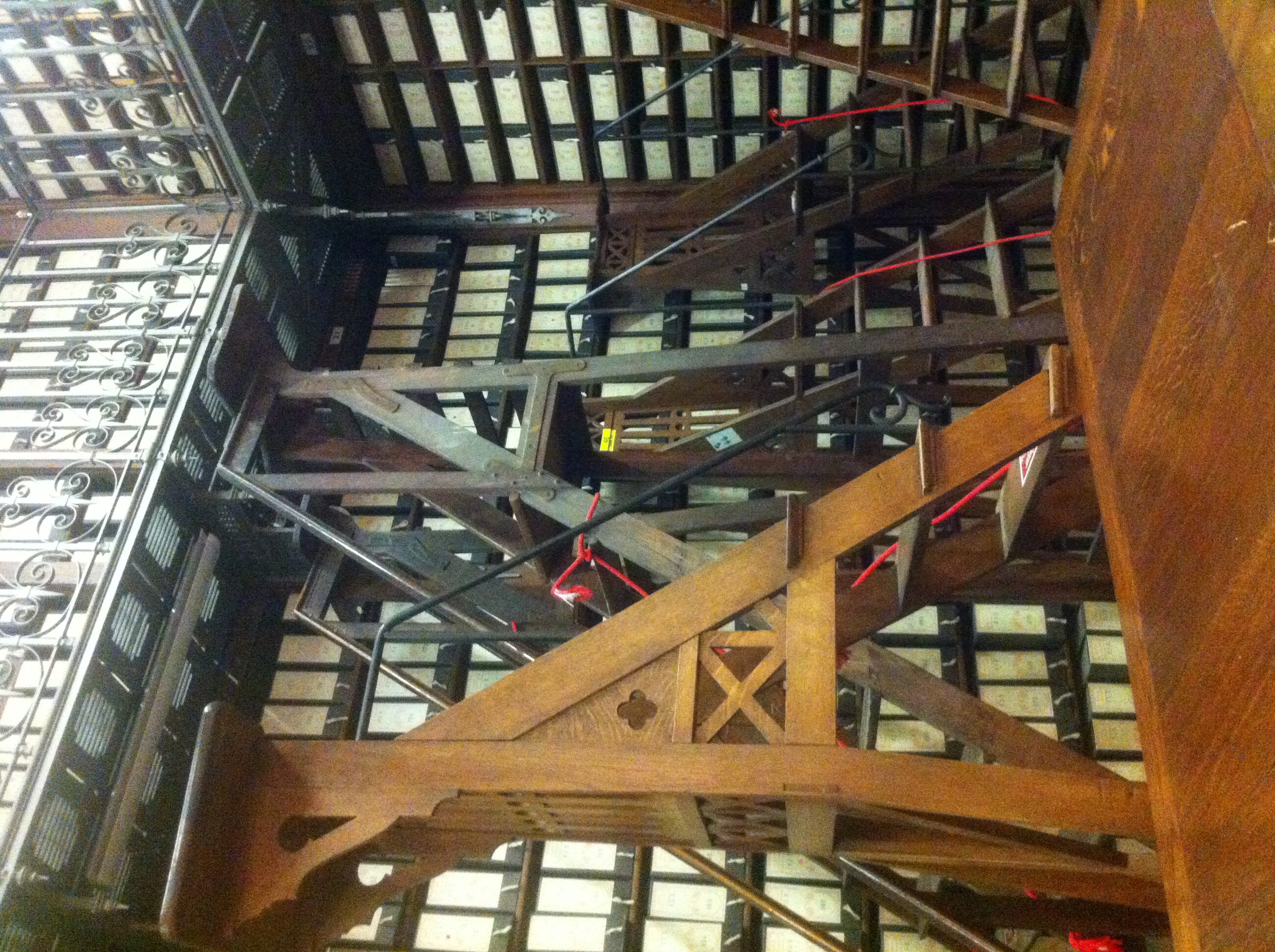
Archives nationales, Paris, 17 May 2014. Photo: Allison Meier, CC BY-SA 2.0. Original image displayed in its embedded portrait orientation, with original indoor photographic grain. Historical document-storage context only—not a translation or certification venue, a sample certified document or a promise of public access.
Three fictional cases, three different questions
A public birth record issued in another EU country. Before commissioning a translation, the reader checks whether the relevant multilingual-form arrangement applies and requests official clarification where necessary. The result depends on the document and receiving use; nationality alone is not the whole analysis.
A document issued outside the EU. The reader does not try to generate an EU multilingual standard form for it. They identify the French procedure's translation requirement and separately investigate any applicable authentication route or exemption.
A document requested by a private organisation. The reader asks that organisation what it accepts instead of assuming a rule for presentation to public authorities settles the question. They keep the written requirement with the quotation.
These examples are routes for enquiry, not determinations that a particular translation is always required—or always unnecessary.
Check the delivered package without rewriting it yourself
When work arrives, compare the practical details with your order: the correct source version, the relevant pages, names and dates, the intended language, and the promised format. A basic completeness check does not make you the certifying professional, but it can reveal that a page is missing or the wrong document was used.
If something appears wrong, ask the professional to address it. Do not silently edit a signed or certified translation and continue to present the altered file as the professional's unchanged work. Keep any corrected version clearly associated with the source it translates.
The same discipline applies to names. If two official records use different spellings, explain that discrepancy through the proper process. Do not ask a translator to conceal the source wording simply to make the file appear consistent.
A useful clarification before spending
If the official instructions leave a genuine uncertainty, ask the receiving service a focused question:
For [named procedure], I will present [document] issued by [authority and country] in [language]. Please confirm the translation qualification or accepted alternative, the required delivery format, and whether a separate authentication step applies.
This is an enquiry aid, not a formal application or appeal. Use a verified channel and avoid sending unnecessary personal documents with an initial question.
The aim is not to find the most elaborate-looking certification. It is to obtain the right language and formal treatment for the particular document and use. Clear requirements first, a correctly scoped order second, and careful handling of the original throughout—that sequence avoids both unnecessary expense and avoidable rejection.
Sources and scope
Official French Service Public, EU Your Europe and e-Justice guidance was checked remotely on 29 October 2026. This article concerns administrative document requirements within France In Context's approved content scope. It does not undertake a translation project, recommend a particular commercial provider or determine an individual document's admissibility. No professional was contacted and no personal file was uploaded. Photographs are historical contextual illustrations, not evidence of a translator's current registration or a document's certification.