Free · France
Provins: What a merchant house reveals about town governance
Ask who could use it, not only who built it
A merchant house is an awkward witness to government. Its walls can suggest how goods and people were accommodated, but they cannot name every person entitled to rent a room, receive an income or authenticate a sale. Those rights need documents. In Provins, the building called the Grange aux Dîmes provides a particularly useful starting point because its familiar name belongs to a later use, not simply to the commercial activities for which it is now interpreted.
The narrow feature examined here is the house as divisible space: rooms could have different functions, while rights connected to the property could belong to different actors. This is not a claim that the building served as a medieval town hall. It is a way of asking how the practical use of a commercial house depended on institutions beyond its door.
Rooms and tenants are different kinds of evidence
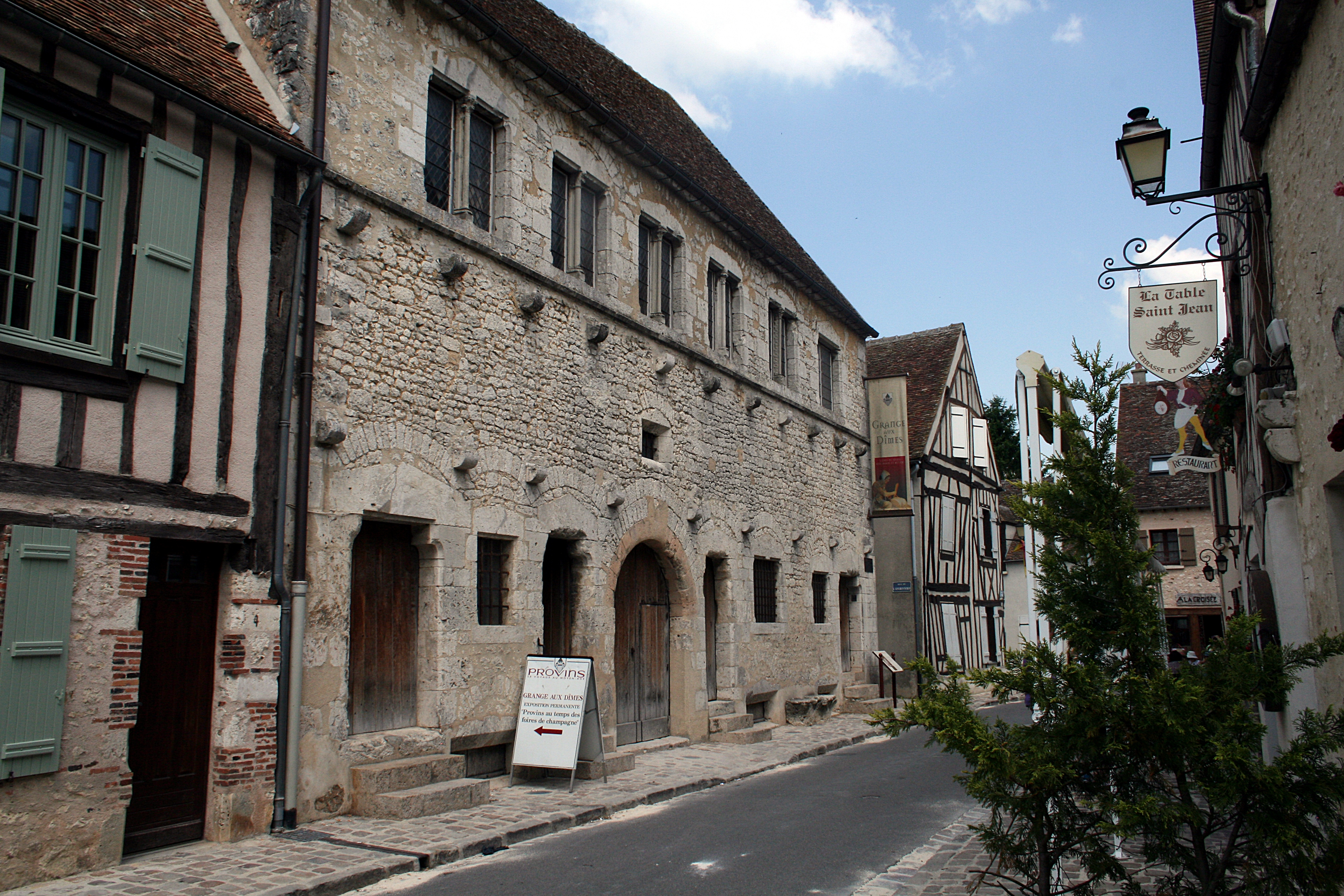
Provins Tourisme locates the Grange aux Dîmes at 3 rue Saint-Jean. Its French account assigns storage to the lower room, selling to the level above and dwelling to the top. It describes a vaulted lower hall and carved capitals, while explaining that recovered leases identify merchants from Toulouse among the tenants. It dates use as a store for the harvest tithe to the sixteenth century. Provins Tourisme, Grange aux Dîmes
The description combines two sorts of knowledge: an interpretation of the building and information attributed to leases. The distinction matters. A room can be suitable for storage without telling us whose merchandise it contained; a lease can identify an occupant without making that person the owner.
Likewise, the later name should not turn every earlier transaction into a tithe payment. Storage is a physical function that can persist while the reason for storing goods changes. Commercial occupation and collection of an agricultural levy are not interchangeable activities merely because they occurred within the same building.
The Grange aux Dîmes on 10 July 2013. Its street-facing openings and masonry help situate the building discussed here; this modern exterior photograph does not establish a medieval tenant, title or transaction. Photograph: Jean-Pol GRANDMONT, CC BY 4.0; unmodified.

A name connects the house to a documentary question
The département's account calls the building the Hôtel des Forcadas before identifying it with today's Grange aux Dîmes. That association offers a route into local records, rather than a complete ownership history. Its account also imagines the spaces in use by merchants, a narrative device intended to make the fairs accessible to a broad public. Seine-et-Marne, history of the Champagne fairs
A name is useful, but it needs handling carefully. It can connect a monument to a documentary reference without proving that every wall, room or property boundary has remained unchanged. The departmental identification is therefore treated here as an interpretive link, not as a cadastral demonstration.
This changes the question from “Which famous merchant owned this house?” to “What kinds of rights could be attached to a property described under this name?” The second question is less biographical, but it reveals more about the organisation of the town.
Income was not the same thing as the house
The municipal-library catalogue describes manuscript 85, item 85, as an October 1257 charter: Gila, widow of Jean, sold the dean and chapter of Saint-Quiriace forty sous of annual income in the house of Forcadas for thirty livres provinoises. The described transaction concerns an income right, not an outright sale of the entire house. Provins manuscript catalogue, ms. 85, item 85, p. 20
The same collection's item 139 describes a different transaction in November 1321: money-changers Manuel and Pierre Falet sold a house in the grand'rue to the chapter for 460 livres tournois. Fair wardens were among those attesting the act. This unnamed house is not identified here with the Grange aux Dîmes. Same catalogue, ms. 85, item 139, p. 23
These catalogue descriptions expose relationships absent from a façade: income-holders, purchasers, church institutions and officials recording transactions. They do not provide a complete constitutional history. Nor were the original charters examined. Their value is the precise distinction between rights over income and a sale of property.
Governing trade was more than providing a room
The ICOMOS assessment reproduced in a municipal planning annex describes the fair as a sequence involving inspection of merchandise, negotiation and purchase, followed by legal verification. It distinguishes these international merchant gatherings from markets directed towards consumers. Its architectural discussion places substantial commercial buildings such as the Grange aux Dîmes within that wider organisation. Municipal UNESCO annex, ICOMOS assessment, PDF pp. 152–153
A well-arranged house could support business without supplying all the authority needed to make an agreement dependable. Space and institutional recognition answered different problems. That is the connection between a merchant building and governance: architecture accommodated exchange, while rules and officials helped establish relationships between parties.
Nothing in this general assessment proves that a particular upper room in the Grange was a court or that all legal verification occurred there. Nor should “town governance” be reduced to a single municipal administration. The relevant historical actors were not simply earlier versions of today's mayor and council. Their functions must be identified from evidence, not projected backwards from modern offices.
The exceptional stone house was not the whole town
Provins's municipal architectural diagnosis provides a corrective to concentrating on one conspicuous monument. It describes a wider stock of buildings combining shops or workshops with habitation. In the lower town, timber framing and masonry were often combined; the diagnosis relates construction choices to damp and unstable ground. It also notes that many former shop-houses in the upper town disappeared as uses changed and agricultural activities became more prominent. Ville de Provins, architectural diagnosis, printed pp. 179–182
The surviving merchant monument is consequently not a statistical sample of every household. Its substantial fabric and heritage prominence should not make poorer, altered or vanished premises disappear from the account.
This civic document is concerned with identifying what deserves attention in the built environment. Its value is not that it supplies a medieval lease register, but that it makes change visible at the scale of building types. Preservation selects what later generations can readily see. The capacity to explain an old town therefore depends partly on recognising what its most prominent surviving house cannot represent.
Public ownership and protection are separate facts
The Ministry of Culture's monument record classifies the Grange aux Dîmes as communal property and records its protection through an avis de classement dated 16 April 1847. The database describes a protected building; it does not supply an uninterrupted list of earlier owners or reproduce all the transactions that brought it into public hands. Ministry of Culture, Mérimée PA00087206
These two entries answer different questions. Ownership identifies the recorded proprietor; protection recognises a heritage status. Neither tells us who held a medieval income right. Reading them together with earlier evidence should therefore produce a sequence of distinct arrangements, not a story in which “the town” has always possessed and controlled the building in the same way.
The distinction also prevents an easy misunderstanding of public heritage. A building can be publicly owned while its historical interpretation remains a separate activity requiring research. Its civic status does not make every attractive story about its past equally well established.
The local museum makes shared responsibility explicit
A nearby institution offers a useful comparison without being mistaken for another documented merchant tenancy. The Société d'histoire et d'archéologie de l'arrondissement de Provins states that it owns the Maison Romane, while the city is responsible for the Musée de Provins et du Provinois housed there. The displayed collections belong either to the association or to the municipality. SHAAP, museum presentation
The division is clear: ownership of the envelope, responsibility for the institution and ownership of its contents are not identical. It is a modern arrangement, not evidence that medieval Provins had the same structure. Its usefulness is methodological. A familiar institutional name can conceal several different relationships to a building.
The Ministry's museum record adds that the collection brings together municipal and historical-society holdings, with material acquired through gifts, purchases, deposits and recovery during works or excavations. A museum interior is therefore an assembled historical resource, not the surviving furnishings of one medieval household. Ministry of Culture, museum record M0383
The comparison discourages a misleading shortcut: the story of a historic house cannot be read directly from the ownership or objects of the institution occupying it today.
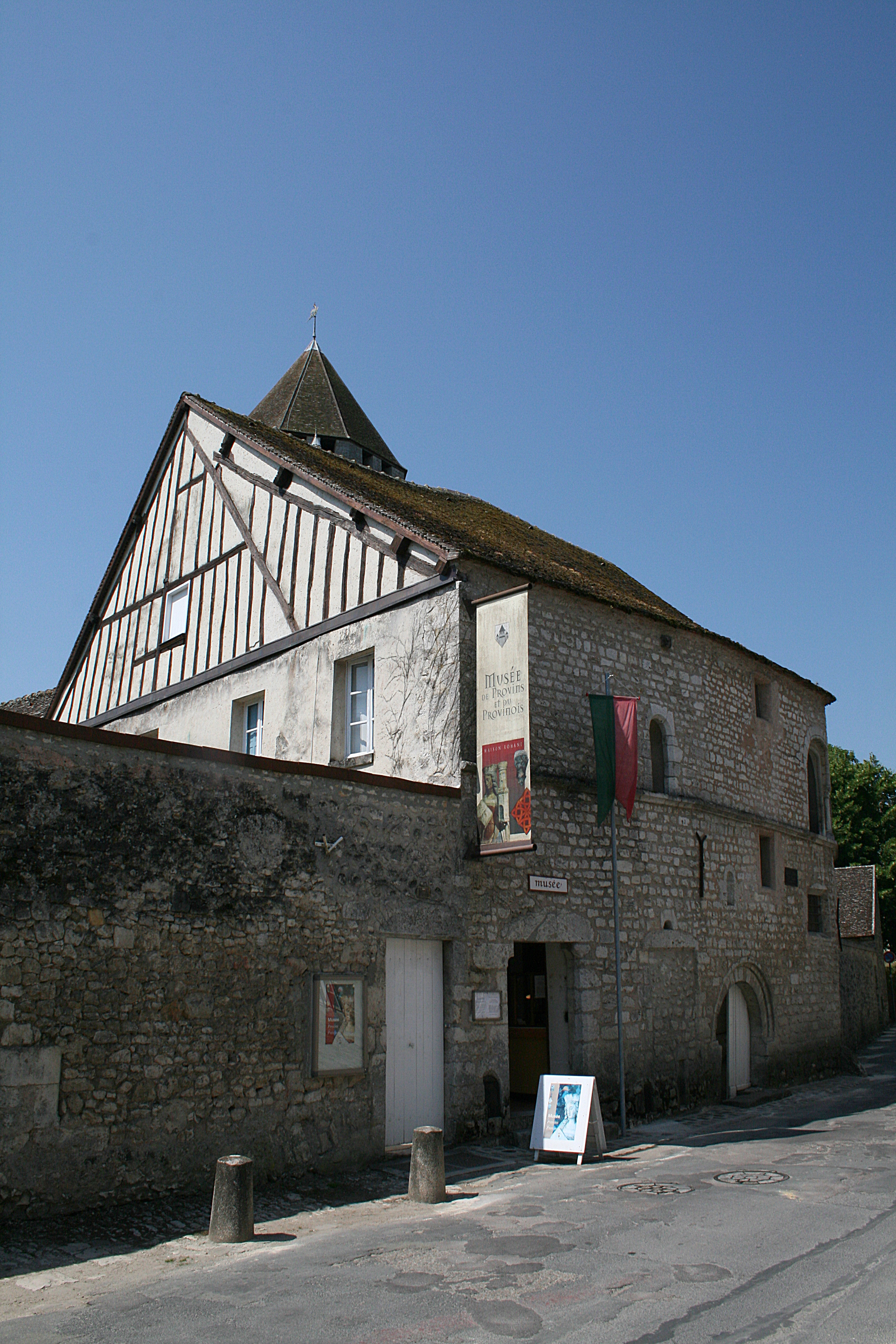
The Maison Romane, home of the Musée de Provins et du Provinois, on 10 July 2013. This is a different building from the Grange aux Dîmes; its museum signs do not by themselves establish the ownership of the building or collections. Photograph: Jean-Pol GRANDMONT, CC BY 4.0; unmodified.

An ensemble, not a timeless system
UNESCO's management account, consulted on 27 October 2026, describes ownership across the historic property as divided among public authorities, private individuals and institutions. It also explains that protection concerns the wider urban ensemble, including control of development. World Heritage recognition does not mean that one organisation owns every house or runs every activity inside the boundary. UNESCO, Provins, protection and management
The Grange aux Dîmes therefore reveals town governance through distinctions rather than through a single grand explanation. Occupying a room, receiving income from a property, purchasing a house, authenticating a transaction and conserving a monument are different actions. They need not be carried out by the same people, and the evidence for one does not establish the others.
Its rooms make commerce physically imaginable. The documents make relationships more specific. The museum and civic records show how responsibility is arranged and described today. Kept separate before being compared, these sources allow the merchant house to explain something more substantial than medieval atmosphere: the town's buildings were places where several kinds of authority and economic interest met.
Location orientation
Provins, France — general map search. This town-level orientation is not a verified entrance, route or access permission, nor a reconstruction of medieval property boundaries.
Source register
All sources opened on 27 October 2026; links accompany the relevant discussion.
- Provins Tourisme: functions, tenancy evidence and later naming.
- Seine-et-Marne: Forcadas identification; interpretive narrative, not a property survey.
- Municipal manuscript catalogue: ms. 85, items 85 and 139; catalogue summaries only.
- Municipal UNESCO annex: reproduced ICOMOS assessment of commercial organisation.
- Municipal architectural diagnosis: varied building stock and changing uses.
- Ministry PA00087206: recorded ownership and monument protection.
- SHAAP: building, museum and collection responsibilities.
- Ministry M0383: formation of the museum collection.
- UNESCO: ensemble management and mixed ownership.
Evidence limits
No original lease, 1257 charter or 1321 charter was inspected. The Forcadas identification rests on the departmental account; no complete parcel or title history was reconstructed. The 1321 grand'rue house is not equated with the Grange. Income rights, occupation and ownership remain distinct. Broad room-use explanations are attributed to the monument operator; no court chamber is invented. The Maison Romane's original occupants are not assigned a merchant identity. The municipal diagnostic is historical planning evidence, not current project-specific legal advice. A February 2023 council PDF exceeded the web fetch limit and was not used.