Free · France
What Is a Devis Before a Home Repair?
A repairer sends a page headed devis, with a total at the bottom and a space for your agreement. It is tempting to read only the total. Yet two pages promising to “repair the bathroom” might describe quite different jobs: replacing a fitting, investigating a leak, or opening and restoring a wall.
In French consumer guidance, a devis is an offer of a contract, setting out proposed work and its price. Acceptance can commit both customer and professional; it is not merely a receipt or a casual indication of cost. Service Public: home-work quotations.
Its most useful role is to make the proposed job discussable before you agree to it. This guide explains how to read that proposal, not how to diagnose a fault, validate an individual contract or settle who must pay for a particular repair. Information was checked on 28 October 2026.
First separate three decisions
Requesting a quotation, paying for its preparation and accepting the repair are different decisions. Say which one you are making rather than relying on a vague “yes, that's fine.”
Preparing a devis is generally free, but a professional may charge—for example, for a visit or detailed study—provided the price is disclosed beforehand. A fee may be deducted from later work if the professional offers that arrangement; do not assume it will be. DGCCRF: devis.
A useful opening question is: “Le devis et le déplacement sont-ils payants, même si je ne fais pas réaliser les travaux ?” — Are the quotation and visit chargeable even if I do not go ahead with the work?
For the building and home-equipment repair services covered by the relevant rules, DGCCRF describes a formal written agreement from the first euro, not only for expensive jobs. The required information differs according to whether the contract is concluded at the business, remotely or at your home. This is not a claim that every service in France uses one identical document. DGCCRF: home repairs.
Turn “the plumbing” into an identifiable job
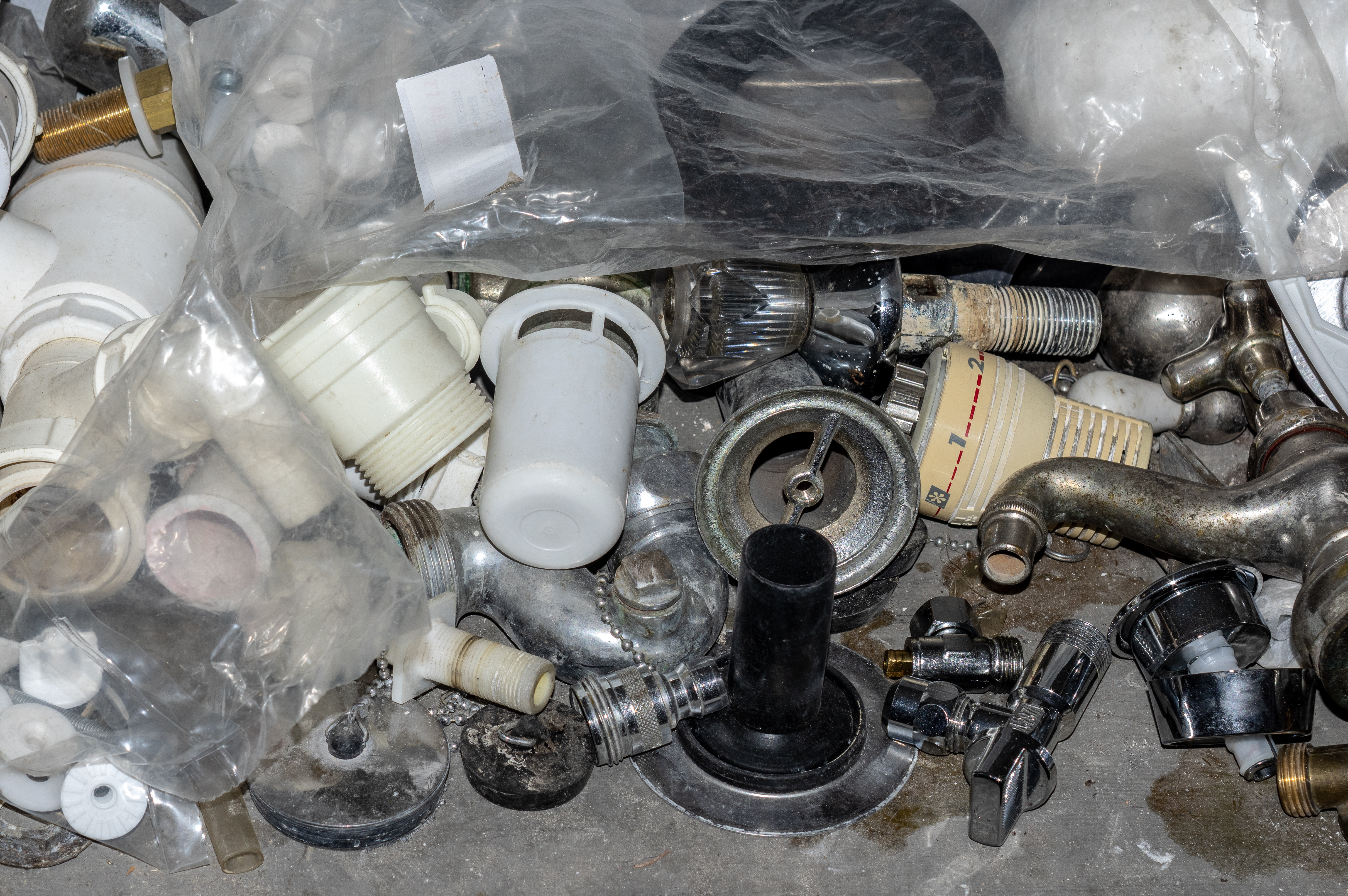
Different objects can hide behind the word “parts.” This photograph is a prompt to ask which component the proposal concerns—not evidence that any pictured part is suitable for your home. Photo: Maïlis Donnet, “Plomberie,” owner-reported capture date 10 July 2015, Flickr source, CC BY 2.0. Unchanged photograph; location not established.
You do not need to know a component's technical name to ask for clarity. Start with a location and an observation: “the tap above the kitchen sink,” or “water appears below this connection.” Then ask the professional to distinguish the proposed diagnosis from the proposed intervention.
For example, “replacement of the kitchen tap, including supply and fitting” describes something different from “visit to investigate the leak.” Neither phrase, on its own, tells you a model, a price or whether adjacent surfaces will be restored. These are discussion examples, not complete model quotations.
A photograph you provide may help identify what you mean, but it cannot establish the cause of a hidden problem. Ask what can be priced now, what remains uncertain and how any further proposal will be presented. Do not turn a visual guess into an instruction to dismantle equipment.
Read across the page, not just down to the total
Use the following as a reading aid, not a substitute for the documents required in your particular situation. Service Public's home-repair guidance distinguishes the document requirements by the way the contract is concluded. Service Public: dépannage à domicile.
| Find this information | Ask yourself | |---|---| | Professional, customer and work location | Is this the right company, person and address? | | Exact work and materials | Can I identify what is being supplied or done? | | Quantities, units and unit prices | Is the price per item, hour, metre or whole task? | | Labour and time calculation | How is the proposed labour charge calculated? | | Travel and other charges | What is included, and what could be additional? | | Total, taxes and VAT treatment | Am I comparing the amount payable, not a tax-exclusive subtotal? | | Offer validity and intervention date | Until when can I accept, and when is the work proposed? |
The last row contains two different clocks. “Offer valid until…” is not the date someone will arrive. Put the offer deadline and the proposed work date on separate lines in your own notes. If either is unclear, ask rather than filling the gap with an assumption.
A comparison that a headline price conceals
Here is an invented arithmetic exercise, not a real quotation, market-price guide or compliant tax template. All stated amounts are fictional tax-inclusive totals or components.
- A: “Supply and fit one specified component: €180; travel included.”
- B: “Component: €95; fitting: €55; travel: €40.”
B adds up to €190: €95 + €55 + €40. Its €95 line is not the whole job. A is €10 lower on these stated figures, but you still cannot declare it better value without checking the component, scope and exclusions. If the two offers name different components, even the €180-versus-€190 comparison is incomplete.
Name the boundary around the repair
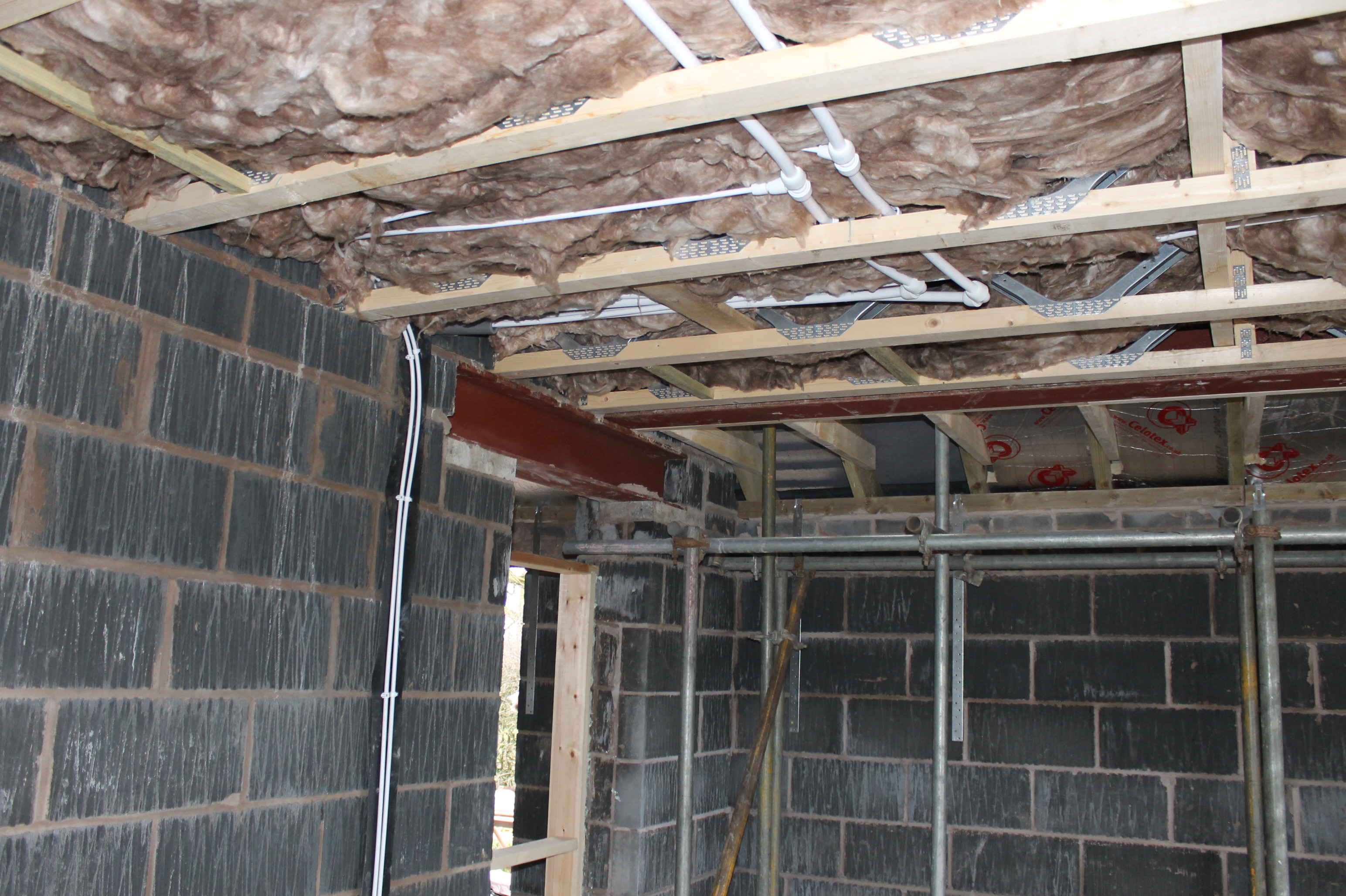
Pipework and the surfaces around it are different parts of a job. This construction-stage photograph helps make that distinction visible; it does not show a fault, a repair outcome or required French building practice. Photo: Philippe Le Toquin (LongSlowBakery), “20160319_IMG_3190,” owner-reported capture date 19 March 2016, Flickr source, CC BY 2.0. Unchanged photograph; location not established.
Imagine a proposal involving pipework behind a finished surface. Your questions might be: “Does the proposed price include access to the pipe? Closing the opening? Repainting? Removing the resulting waste?” Do not infer the answers from the phrase “repair included.” Nor does this photograph establish that a particular wall should be opened.
If a new task is suggested after the first proposal, ask for its scope, added price and effect on timing in writing before agreeing to it. Keep the earlier version as well as the revised one, so “the quotation” does not become an ambiguous reference to two different documents. This is a record-keeping method, not a ruling that every later charge is automatically invalid.
Do not mistake acceptance for a free trial
Read the document and its attached conditions before signing or confirming electronically. Service Public says a devis signed by both parties becomes a contract and each signatory should receive a dated, signed original. Keep your copy. Service Public: accepting a devis.
There is no universal 14-day escape route for every signed devis. Service Public distinguishes agreements made at the professional's premises from distance or doorstep contracts; the latter can carry a withdrawal right, subject to the applicable conditions and exceptions. A request for work to begin quickly also deserves careful reading, not an automatic tick. Service Public: withdrawal distinctions.
The emergency exception is narrow: Article L221-28(8) concerns urgent maintenance or repairs at the consumer's home, expressly requested by the consumer, and only the parts and work strictly necessary to address that urgency. An emergency call does not turn every optional improvement into emergency work. Code de la consommation, Article L221-28.
For an actual cancellation or disputed charge, use the official guidance and obtain qualified consumer or legal help for your circumstances. This article cannot determine your entitlement.
Five phrases to keep the conversation precise
| French question | Meaning | |---|---| | Pouvez-vous préciser ce qui est compris ? | Could you specify what is included? | | Quelle pièce est prévue exactement ? | Exactly which component is proposed? | | Les frais de déplacement sont-ils inclus ? | Is travel included? | | Jusqu'à quelle date cette offre est-elle valable ? | Until what date is this offer valid? | | Pouvez-vous m'envoyer la version modifiée avant mon accord ? | Could you send the revised version before I agree? |
After the work, the invoice or note serves a different purpose from the earlier proposal. DGCCRF says it is supplied after the service and before payment where required; a note can also be requested for a small job. Keep it alongside the accepted devis and any agreed changes. DGCCRF: invoicing after home repairs.
The practical test: before agreeing, can you explain in your own words who will do what, where, for which stated price, with which boundaries and timing? If you cannot, the next step is a question—not a guess at what the total must include.